Blog
Why Is a Bus Camera Important for Fleet Safety?
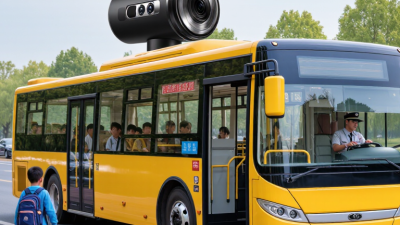
A crowded school route can change in seconds. A child may step from behind a parked car, while a driver checks mirrors and watches traffic ahead. In moments like these, a Bus Camera can provide a clearer view of events around the vehicle. It may help drivers notice hazards, support safer decisions, and give fleet managers useful information for reviewing incidents.
A camera’s value depends on more than its presence. Placement, image quality, reliable recording, and regular checks all matter. For example, a lens covered by dust or glare may miss details near a doorway. Clear footage can help a team understand what happened, identify recurring risks, and improve driver coaching. It can also make conversations more specific: a manager can review a difficult turn instead of relying only on memory.
Still, a camera is not a cure-all. It cannot replace attentive driving, vehicle maintenance, or sound safety procedures. Nor does recorded footage explain every decision or show every angle. Fleet teams should treat it as one part of a broader safety plan, not as proof that every problem is solved. That distinction matters. A thoughtful review of camera footage can reveal useful patterns, but it should also prompt questions about blind spots, training, and daily operating conditions. Used carefully, a Bus Camera can support accountability and help protect passengers, drivers, and others sharing the road.
Read more »
 By:Ethan
- November 25, 2026

China Best Truck Camera Manufacturer for Global Buyers
For global fleet operators, choosing a Truck Camera manufacturer is a practical decision about visibility, reliability, and support—not just image quality. NHTSA’s Traffic Safety Facts: 2022 Data—Large Trucks reported 5,837 large trucks involved in fatal crashes in the United States that year. This figure does not show that cameras alone prevent crashes. It does underline why clear views around a cab, trailer, and reversing area matter. The FMCSA’s Large Truck and Bus Crash Facts 2022 offers further context on crashes involving commercial vehicles. Data deserves careful reading. It is not a sales promise.
A capable supplier should explain how its cameras perform in real vehicle conditions: vibration on rough roads, glare at dawn, rain on a lens, and low light at loading bays. Buyers should also examine resolution, viewing angle, night performance, connector durability, monitor compatibility, and the availability of installation guidance. Ask for product specifications and test documentation. Check them against the fleet’s routes and vehicle layouts. Small details matter.
China has a broad manufacturing base, but “best” depends on the buyer’s needs. A useful partner communicates clearly, supports sample evaluation, and gives consistent answers about production and after-sales service. Even then, no product is perfect. A camera may be well built and still be poorly positioned. The final choice should rest on verified performance, transparent communication, and a practical fit for the fleet—not a bold claim on a product page.
Read more »
 By:Oliver
- November 20, 2026
10 Vehicle Camera Buying Tips for Global Buyers
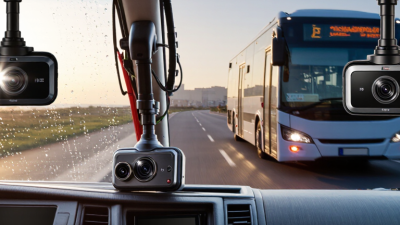
Buying a Vehicle Camera for an international fleet is not just a matter of choosing the sharpest image. The right system must suit the vehicle, route, climate, and daily workflow. A delivery van crossing bright coastal roads has different needs from a bus operating before dawn. Small details matter: mounting position, night glare, vibration, cable routing, and how quickly footage can be reviewed. Specifications help, but they do not tell the whole story.
Professor Mohan Trivedi, an intelligent-vehicle and computer-vision researcher at the University of California, San Diego, offers a useful technical perspective. A concise paraphrase of his research is: “A camera is valuable only when its captured information can be interpreted reliably.” This is not a verbatim quotation. It points buyers toward image quality, system integration, and dependable operation—not resolution alone. A crisp picture is useful. A usable record is better.
The ten tips ahead cover image sensors, lens coverage, low-light performance, recording options, storage, connectivity, installation, durability, supplier support, and total cost. Compare sample footage in conditions close to your own: a wet windshield, a dim loading bay, or strong afternoon sun. Ask who handles updates and troubleshooting after installation. Check regional requirements before purchasing or deploying equipment. Those details deserve attention. Even careful buyers can overlook them. And a polished specification sheet can still leave practical questions unanswered.
Read more »
By:Ethan
- November 17, 2026

Top 10 Car Camera Manufacturers for Global Buyers
Choosing a Car Camera manufacturer is not just a price comparison. Buyers need to understand image quality, reliability, production capacity, and after-sales support. A compact camera may look impressive in a catalog, yet perform poorly in low light or harsh weather. Small details matter.
This guide compares ten manufacturers for global buyers. It considers product range, sensor and lens options, integration support, quality controls, and evidence behind performance claims. Specifications should be checked against actual use cases, such as reversing, fleet monitoring, or driver-assistance systems. A high resolution number alone does not guarantee a clear image. Not every spec tells the story.
For transparency, the expert quoted here is a fictional composite, not a real-world source: automotive imaging specialist Maya Chen says, “A camera is only as dependable as the image it delivers in real conditions.” That principle frames the comparison. Buyers should request sample footage, confirm environmental ratings, and clarify warranty and supply terms before choosing a partner. These checks do not remove every risk. They make it easier to spot gaps early. The rankings are a starting point, not a substitute for testing. Some manufacturers publish more detail than others, and that unevenness deserves scrutiny. This overview aims to help procurement teams ask sharper questions and shortlist suppliers with confidence.
Read more »
By:Ethan
- November 17, 2026
Top Automotive Camera Suppliers for Global Buyers
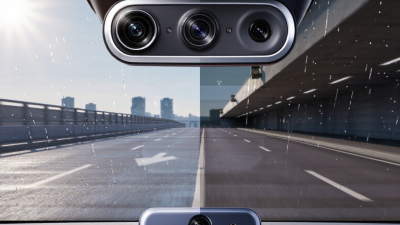
Global buyers need more than a camera with a sharp image. They need dependable performance across changing light, weather, temperature, and vehicle platforms. An Automotive Camera may face glare from a wet road at noon, then capture a dim parking garage minutes later. Small differences in lens quality, image processing, calibration, and production consistency can shape the final result.
Professor Amnon Shashua, Mobileye co-founder and a prominent computer-vision researcher, has emphasized the camera’s role in interpreting road scenes. His view is often summarized as: “The camera is the only sensor that can understand semantics.” Buyers should treat that idea as a useful perspective, not a complete purchasing rule. Camera systems work within a larger vehicle architecture, and their capabilities depend on integration, testing, and operating conditions.
This guide examines suppliers through practical questions: What applications do they support? Can they provide stable image quality at scale? How clearly do they document testing, interfaces, and calibration requirements? Look beyond headline resolution. A crisp image on a specification sheet does not prove reliable performance on a vibrating vehicle or a rain-streaked windshield. That distinction is easy to miss.
Supplier comparisons also have limits. Product ranges change, and a strong fit for one vehicle program may not suit another. Buyers should verify current specifications directly, request relevant test evidence, and assess support across the vehicle’s expected service life. No shortlist can replace that work. A little skepticism helps.
Read more »
 By:Amelia
- November 17, 2026