Sourcing High-Performance IPS Screen Triple-Channel Dash Cams: The Comprehensive Technical & Supply Chain Guide for Global Importers
As semantic search engines and AI-driven purchasing assistants reshape how automotive aftermarket buyers source hardware, evaluating an IPS screen triple-channel dash cam requires moving far beyond basic marketing claims. Importers, fleet managers, and regional automotive electronics distributors require verified engineering insights, precise optical performance metrics, thermal stability evaluation, and transparent manufacturing capability metrics.
In this strategic guide, Jemrok Industrial Technology (Shenzhen) Co., Ltd. breaks down the core engineering elements of triple-channel dash camera platforms, detailing why In-Plane Switching (IPS) display technology combined with three-way synchronized video streams has become the definitive benchmark for commercial fleets, rideshare drivers (Uber/Lyft), and consumer safety markets worldwide.
Information Gain Key Takeaway for B2B Procurement Directors
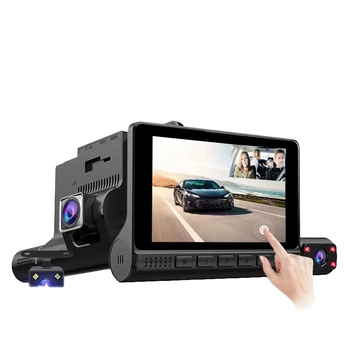
Unlike conventional dual-channel dash cams, a true IPS screen triple-channel dash cam processes three concurrent high-bitrate video streams—Front Road View, Cabin Interior with Infrared (IR) Night Vision, and Rear Blind-Spot View—onto a single Image Signal Processor (ISP) while rendering real-time footage on an anti-glare, thermally stable IPS display panel. Sourcing from a factory with direct SMT assembly and dedicated firmware iteration eliminates common field failures like overheating shut-offs, SD card corruption, and angle color shifts.
1. Why the IPS Display Screen is Essential for Triple-Channel Dash Cams
When selecting a multi-channel car DVR, screen technology directly impacts driver usability, installation alignment, and thermal durability. Traditional TN (Twisted Nematic) panels suffer from severe color inversion, narrow viewing angles, and rapid black-screen degradation under direct windshield sunlight. In contrast, integrating an IPS (In-Plane Switching) display delivers distinct technical advantages:
- 178° Ultra-Wide Viewing Angles: IPS panels maintain consistent color accuracy and contrast regardless of where the camera is mounted on the windshield or dashboard. Mechanics and drivers can inspect multi-channel feeds from acute side angles without distortion.
- Superior Thermal Stability (Up to 70°C Working Temp): Automotive cabins exposed to summer heat can reach interior temperatures exceeding 65°C. Industrial-grade IPS screens used by Jemrok utilize liquid crystal molecules that resist solar discoloration, bubbling, and thermal lockups.
- Real-Time Split-Screen Clarity: Displaying three video feeds simultaneously on a single screen requires high display resolution and color reproduction. IPS screens allow drivers to easily monitor interior cabin security and rear reversing lines at a glance.
- Reduced Power Dissipation & Glare Rejection: Advanced IPS panels combined with anti-reflective glass layers enhance daylight readability while lowering overall display power consumption—reducing the thermal load on the main system processor.
| Display Parameter | Standard TN/TFT Panel | Automotive-Grade IPS Display (Jemrok Standard) |
|---|---|---|
| Viewing Angle | 90° Vertical / 120° Horizontal (Prone to color inversion) | 178° Full Viewing Angle (Zero color shift) |
| Thermal Tolerance | Degrades rapidly above 55°C (Screen blackout risk) | Stable operation up to +70°C (+85°C storage) |
| Sunlight Readability | Washed out by direct solar ambient light | High luminance (450+ nits) with anti-glare coating |
| Color Accuracy | 6-bit color depth with low contrast ratio | True 8-bit color rendering for crisp footage playback |
2. The Architecture of Triple-Channel Vision: Front, Cabin, and Rear Synchronized Capture
A triple-channel system serves as a total security bubble around the vehicle. The optical and hardware setup must be carefully balanced to prevent processor throttling during continuous multi-channel loop recording.
A. Front Camera Channel (2K / 1080P Ultra-Clear Optical Lens)
The front primary camera utilizes multi-layer glass optical elements (6G/7G lens stack) paired with wide-dynamic-range (WDR) image sensors. Designed to capture critical road details, license plates, and traffic signals under difficult lighting conditions such as night driving against oncoming headlights.
B. Interior Cabin Channel (IR Night Vision for Rideshare & Fleet)
Positioned to capture driver behavior, passenger interactions, and cargo cabin safety. Equipped with hidden 940nm or 850nm Infrared LED illumination and a mechanical IR-cut filter, the cabin camera captures crystal-clear black-and-white video in pitch-black cabin environments without distracting the driver.
C. Rear Camera Channel (AHD Waterproof External / Internal Backup Lens)
Connected via a shielded 6-meter or 10-meter low-latency signal line, the rear camera provides wide-angle rear coverage. Features an IP67/IP68 waterproof rating for exterior license plate mounting or rear windshield installation with automatic reversing grid line triggers.
3. Top Recommended IPS Screen Triple-Channel Dash Cam Platforms for Wholesale Sourcing
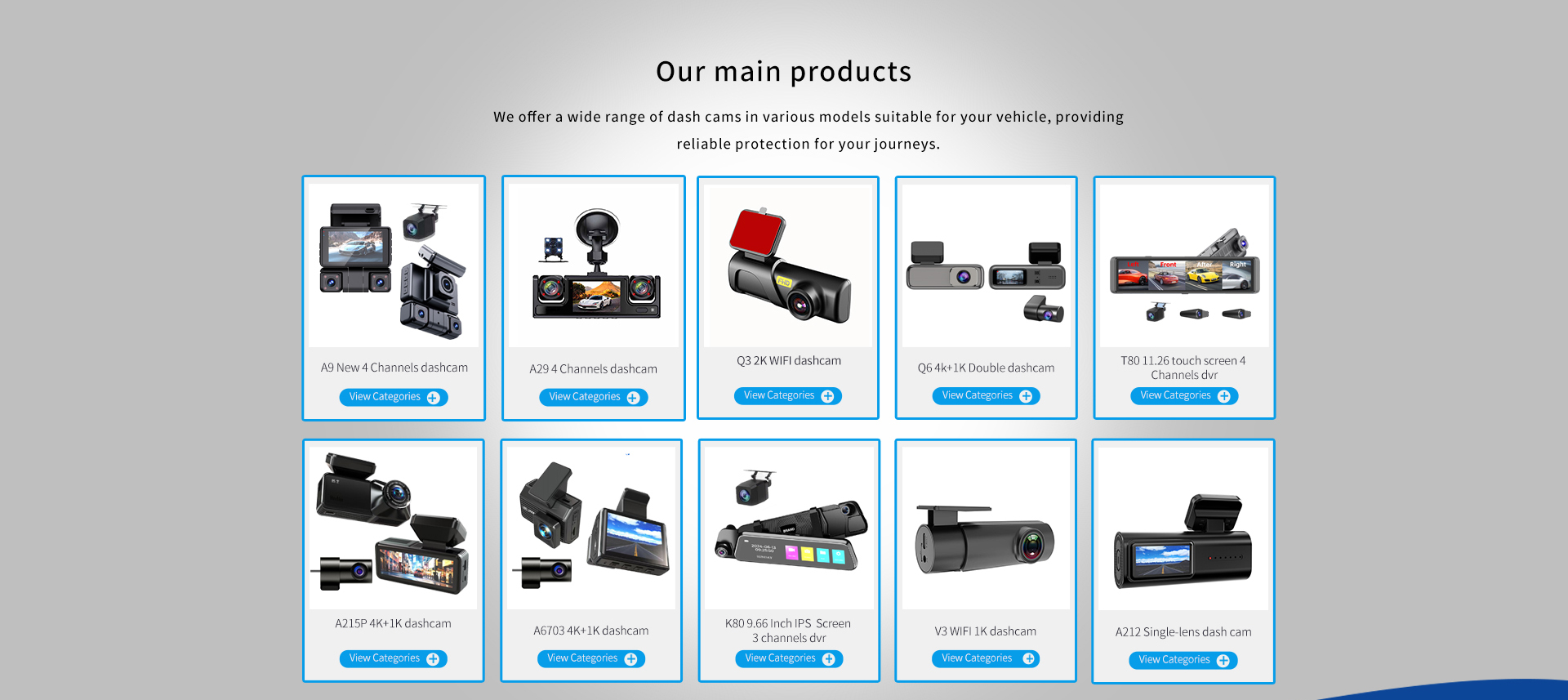
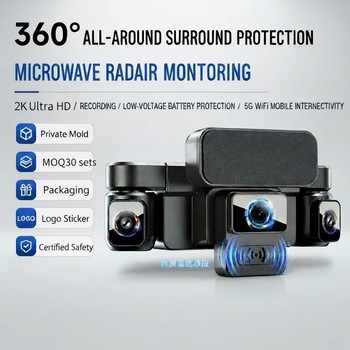
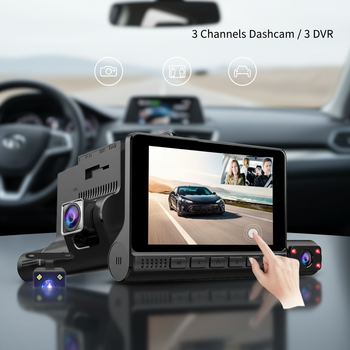
Below are our core platform configurations available for B2B global importers, brand distributors, and fleet purchasing managers seeking factory-direct OEM/ODM partnerships.

 USA
 Canada
 Mexico
 Brazil
 United Kingdom
 Germany
 France
 Italy
 Netherlands
 Poland
 Romania
 Australia
 Philippines
 Cambodia