A crowded school route can change in seconds. A child may step from behind a parked car, while a driver checks mirrors and watches traffic ahead. In moments like these, a Bus Camera can provide a clearer view of events around the vehicle. It may help drivers notice hazards, support safer decisions, and give fleet managers useful information for reviewing incidents.
A camera’s value depends on more than its presence. Placement, image quality, reliable recording, and regular checks all matter. For example, a lens covered by dust or glare may miss details near a doorway. Clear footage can help a team understand what happened, identify recurring risks, and improve driver coaching. It can also make conversations more specific: a manager can review a difficult turn instead of relying only on memory.
Still, a camera is not a cure-all. It cannot replace attentive driving, vehicle maintenance, or sound safety procedures. Nor does recorded footage explain every decision or show every angle. Fleet teams should treat it as one part of a broader safety plan, not as proof that every problem is solved. That distinction matters. A thoughtful review of camera footage can reveal useful patterns, but it should also prompt questions about blind spots, training, and daily operating conditions. Used carefully, a Bus Camera can support accountability and help protect passengers, drivers, and others sharing the road.
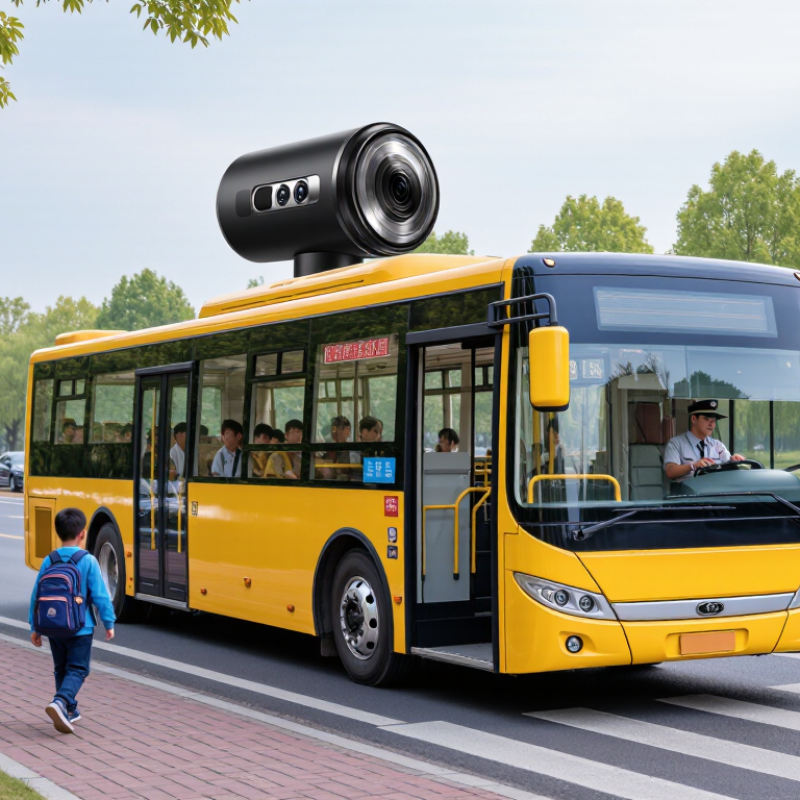
What a Bus Camera Is: Forward-Facing, Cabin, and Surround-View Systems
A bus camera system can give fleet managers a clearer view of events on the road and inside the vehicle. A forward-facing camera records the roadway, traffic signals, and events near the front of the bus. This footage can help clarify what happened after sudden braking or a close pass. It is useful evidence, not a complete account of every event.
Cabin cameras show passenger areas, entrances, and sometimes the driver’s surroundings, depending on placement. They can help staff review boarding, movement in the aisle, or a reported incident. Their views should be checked for blocked seats, glare, and dark corners. A camera aimed poorly may miss the very area it was meant to cover.
Surround-view systems combine images from several exterior cameras to show areas around the bus, including spaces near the sides and rear. Drivers may find these views helpful when maneuvering in a tight yard or near a curb. Still, stitched images can distort distance, so they should support—not replace—mirrors and direct checks. Fleet teams should inspect lenses, confirm recordings are clear, and review footage carefully. The system helps, but it cannot prevent every mistake.
Why Is a Bus Camera Important for Fleet Safety? — What a Bus Camera Is: Forward-Facing, Cabin, and Surround-View Systems
| System Type | Typical View and Placement | Safety Uses | What It Can Help Document | Important Considerations |
|---|---|---|---|---|
| Forward-Facing Camera | Records the road ahead from a camera mounted near the front of the bus, commonly behind the windshield. | Supports review of following distance, lane changes, traffic conditions, sudden braking, and potential hazards. | Road conditions, traffic signals, vehicle movements, and events in front of the bus, subject to camera position and visibility. | View can be affected by windshield glare, dirt, weather, lighting, and obstructions. A recording camera does not necessarily provide automatic warnings. |
| Cabin-Facing Camera | Records some or all of the passenger area from an interior mounting point. Additional cameras may be used to cover separate sections. | Helps operators and fleet managers review passenger incidents, falls, boarding activity, and reported behavior concerns. | Events within the camera’s field of view, which may help establish the sequence of an incident. | Coverage depends on camera placement, seating layout, lighting, and obstructions. Recording policies should address privacy, access, and retention. |
| Surround-View System | Combines views from multiple cameras mounted around the vehicle; some systems present a stitched, bird’s-eye-style display. | Can assist with low-speed maneuvering, tight turns, depot movements, and checking areas close to the bus. | Views around the vehicle captured by the installed cameras, including areas that may be difficult to see from the driver’s seat. | Image stitching can distort objects, and coverage is not guaranteed in every blind area. Drivers must continue using mirrors and direct observation. |
| Multi-Camera Recording System | Uses several camera types connected to a recorder, often with synchronized video and event-triggered clips. | Provides a broader record of road, cabin, and vehicle-side events for safety reviews and incident investigation. | Time-linked footage from installed cameras; optional inputs may include vehicle data such as speed or braking, depending on system configuration. | Recording quality and usefulness depend on camera coverage, correct time settings, storage capacity, maintenance, and a clear retrieval process. |
| Camera with Driver-Assistance Analytics | Uses video analysis alongside one or more cameras to identify selected conditions, such as possible distraction or unsafe following distance. | May provide in-cab alerts or review flags that help direct coaching and safety checks. | Video and system-generated alerts for configured events; alerts should be checked against the footage and operating context. | Detection capability varies by configuration and conditions. Analytics can produce missed or incorrect alerts and should not replace driver judgment or training. |
Fleet safety note: Cameras can support incident review, driver coaching, and visibility, but they do not prevent every collision or replace mirrors, direct observation, safe driving practices, or regular vehicle maintenance. Camera placement, recording access, retention, and passenger privacy should follow applicable laws and fleet policies.
FAQS
It records the road, traffic signals, and events near the bus’s front. It may clarify sudden braking or a close pass, but it cannot show everything.
They can show passenger areas, entrances, and sometimes the driver’s surroundings. Teams may review boarding or aisle movement. Glare and dark corners can hide details.
Several exterior cameras combine views around the bus. These images can help during tight turns near a curb. Distances may look distorted, so mirrors and direct checks remain important.
No. Cameras can preserve useful footage, but they cannot prevent every mistake. A lens may be dirty, or its view may be blocked.
NHTSA recorded 128 deaths in crashes involving school buses. The figure does not mean everyone killed was aboard a bus. That distinction matters.
Video shows visible events, while telematics can add speed, location, braking, and vehicle movement. Together, they may clarify a sudden stop. Neither record is perfect.
They can note the time, route, and conditions, then check for similar events. Discuss specific observations with drivers, not just a score. Some clips stay unclear.
Repeated hard braking could prompt a route or stop-approach review. A driver might also practice smoother braking on a familiar stretch. Small details count.
Conclusion
A Bus Camera system may include forward-facing cameras, cabin cameras, and surround-view cameras, each offering a different perspective on vehicle operations. Together, these views can help fleets better understand what happens on the road and inside or around a bus. The need for effective safety measures is clear: NHTSA recorded 128 deaths in school-bus-related crashes in 2022. Video provides useful context for identifying hazards and understanding how events unfold.
When reviewed alongside telematics data, camera footage can help reveal patterns such as risky driving behavior or recurring trouble spots. Fleets can use these insights for driver coaching, incident reviews, and insurance claims. Successful deployment also requires thoughtful planning, including decisions about camera coverage, how long recordings are retained, and clear privacy policies. These practices help fleets make footage useful for safety while setting transparent expectations for drivers and others who may be recorded.