Whitepaper: Engineering Standardizations for Front & Rear Camera Systems in Faro & Southern Europe
As the primary transportation hub for the Algarve region, Faro, Portugal represents a highly specialized automotive market. The convergence of high-density seasonal rental fleets, strict European Union automotive safety directives, and extreme coastal ambient conditions demands vehicle surveillance hardware built far beyond consumer-grade specifications. B2B importers, automotive accessory distributors, and fleet managers operating in the Faro municipality require direct factory partnerships with manufacturers that understand regional environmental stress factors and legal compliance requirements.
Core Technical Insight: Traditional lithium-ion battery dashcams exhibit elevated failure rates in Southern European coastal climates due to thermal expansion and electrolyte degradation. Modern fleet specifications for the Faro market mandate supercapacitor power architecture paired with multi-layer glass optics to prevent focal drift caused by prolonged sun exposure.
1. Extreme Climate Adaptation: Thermal Engineering & Saline Protection
Vehicles parked along the Faro coastline—from Praia de Faro to the Ria Formosa commercial maritime zones—are subjected to dual environmental hazards: intense solar radiation and airborne salt spray. Standard dash cameras frequently suffer from plastic housing distortion, battery swelling, and sensor noise under these conditions.
- Supercapacitor Power Supplies: Replacing volatile lithium batteries with industrial supercapacitors allows front and rear cameras to operate reliably between -20°C and 70°C, ensuring continuous 24/7 parking surveillance without heat-induced shutdown risks.
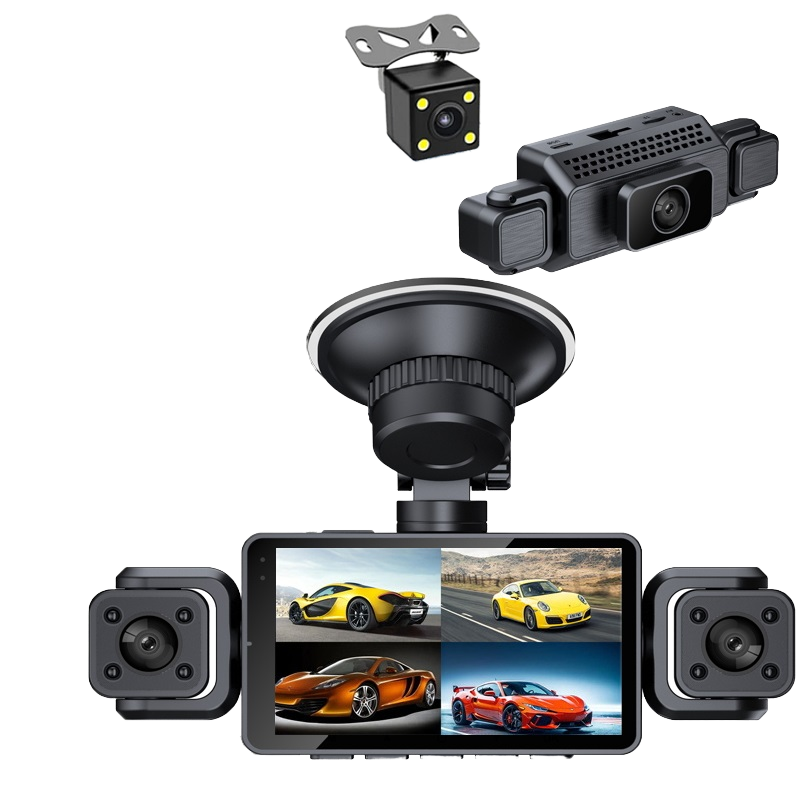
- IP68/IP69K Waterproof Rear Cameras: Exterior-mounted reverse and rear-view camera modules utilize hermetically sealed zinc-alloy housing with anti-corrosion coatings to resist saline mist degradation along coastal highways like the EN125.
- Multi-Lens Glass Optics: Plastic lenses deform under intense Algarve solar heat, leading to out-of-focus footage. Our systems feature 6-layer glass (6G) lens assemblies with thermal stability coatings to maintain sharp 1080P/2K clarity year-round.
2. Information Gain: Technical Benchmark Visualizer
To assist Faro fleet procurement directors in selecting optimal camera hardware, the following benchmark comparison outlines key architectural differences between basic retail units and enterprise-grade front-rear dashcam platforms:
| Feature Parameter | Standard Consumer Dashcam | Enterprise Fleet Front/Rear Platform (Jemrok) |
|---|---|---|
| Power Cell Architecture | Lithium-Polymer (Prone to swelling >45°C) | Industrial Supercapacitor (Stable up to 70°C) |
| Rear Camera Weatherproofing | IP65 Plastic Casing | IP68 / IP69K Hermetic Metal Alloy Casing |
| Night Vision Technology | Standard Digital Gain Control | Sony STARVIS / STARVIS 2 WDR Sensor Array |
| Voltage Tolerance | Fixed 5V / 12V Input | 12V–24V Wide Voltage Support with Low-Cutoff Protection |
| Regulatory Approvals | Basic CE Mark | Full CE, FCC, RoHS, and EU GSR Compliance Documentation |
| OEM Customization | None (Off-the-shelf) | Custom Boot Screen, Firmware, Housing, Packaging (MOQ 50 Sets) |
3. Regulatory Compliance: EU Data Protection & CNPD Guidelines in Portugal
Importing and deploying camera systems in Portugal requires strict adherence to privacy legislation enforced by the Comissão Nacional de Proteção de Dados (CNPD) and EU General Data Protection Regulation (GDPR). Wholesalers serving Faro businesses must provide hardware equipped with privacy-conscious firmware configurations:
- Loop Recording & Auto-Overwrite: Video footage is continuously recorded in 1, 3, or 5-minute segments, automatically overwriting un-flagged video to prevent unauthorized long-term storage of public road data.
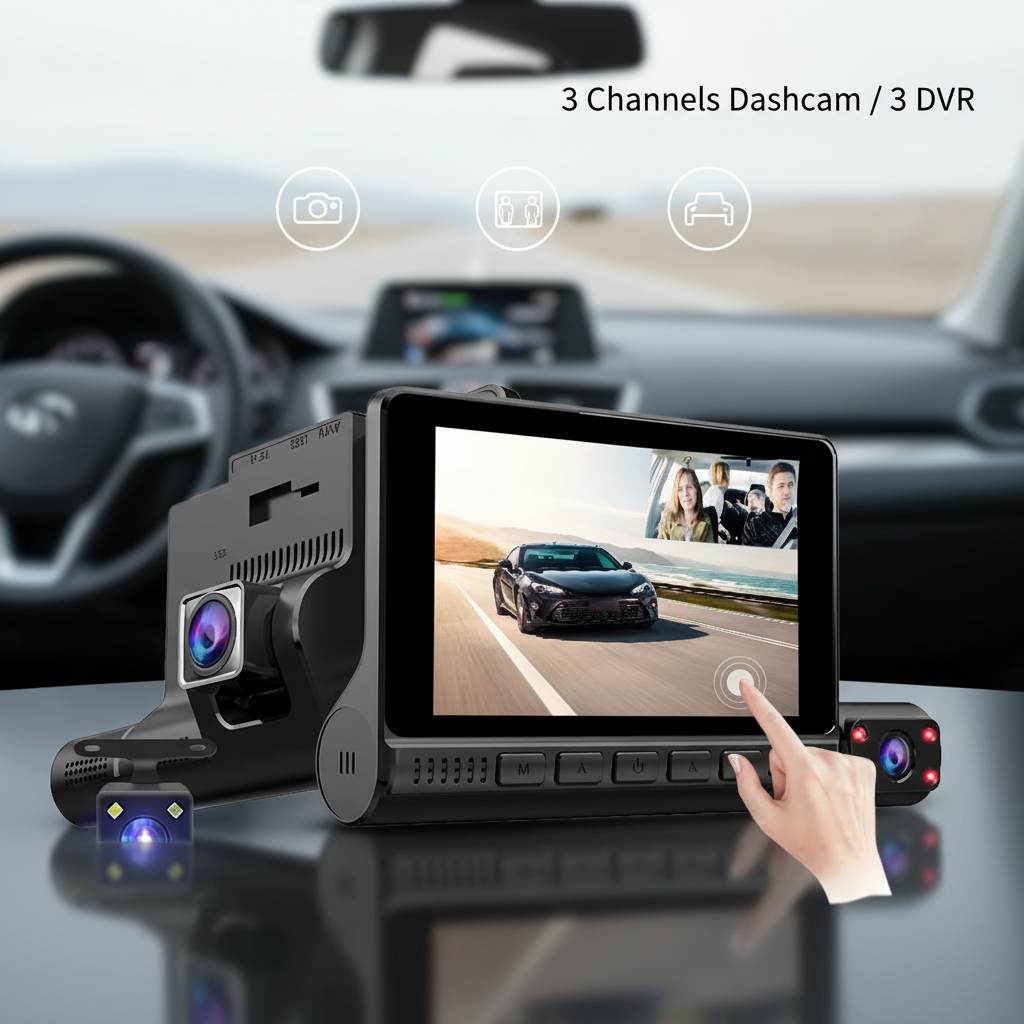
- Selective Interior Audio/Video Muting: 3-channel ride-share (TVDE) recorders allow one-touch privacy muting of interior microphones to respect passenger consent while maintaining external front-rear visual security.
- Encrypted File Protection: G-sensor collision footage is locked into an isolated memory partition, preventing tampering or accidental deletion prior to insurance claim submission.
4. Local Market Trends: Electric Vehicles & Fleet Telematics Expansion
The Algarve is experiencing rapid adoption of Electric Vehicles (EVs) within rental fleets and taxi services. Modern vehicle surveillance hardware must interface cleanly with EV electrical architectures without inducing parasitic battery drain or triggering CAN-bus fault codes. High-efficiency step-down hardwire kits with adjustable low-voltage cutoff switches (11.8V/12.4V for lead-acid; dedicated thresholds for EV auxiliary batteries) are now standard requirements for Faro automotive distributors.