1. Executive Summary: The Evolution of Commercial Truck Camera Systems in China
In the global logistics, transport, and commercial fleet management sectors, heavy-duty commercial truck camera systems have transitioned from passive backup drivers’ aids to intelligent, proactive fleet management centers. As international regulations—such as the European Union’s General Safety Regulation II (GSR2) and various North American DOT compliance safety directives—mandate enhanced blind-spot awareness and driver vigilance, fleet operators and tier-1 distributors are turning to China’s manufacturing hubs for scalable, high-durability vision solutions.
Shenzhen, recognized as the world's innovation epicenter for commercial automotive electronics, hosts advanced engineering facilities capable of bridging optical physics, industrial design, automotive-grade hardware manufacturing, and edge AI processing. Choosing the right China truck camera system factory is no longer merely an exercise in component cost reduction; it is a strategic partnership for technology co-development, risk mitigation, and long-term total cost of ownership (TCO) optimization.
Core Takeaway for Procurement Officers: Modern commercial fleet vision requires strict adherence to automotive-grade reliability benchmarks including wide-voltage transient protection (DC 9–36V / 12–24V), IP69K ingress ratings against high-pressure steam cleaning, and thermal stability spanning -30°C to +85°C operating environments.
IP69K
Waterproof Standard
DC 9-36V
Wide Transient Voltage
120dB
HDR Dynamic Range
<50ms
AHD Ultra-Low Latency
2. Key Product Architecture & Development Trends in Fleet Safety Electronics
Understanding the technological trajectories of truck camera systems allows B2B buyers and system integrators to future-proof their procurement strategies over a 3-to-5-year hardware lifecycle. The enterprise commercial vehicle vision industry is undergoing four critical technological shifts:
A. Integration of AI Edge Analytics (BSD, ADAS, and DMS)
Legacy cameras merely stream raw video to a dashboard monitor. Next-generation China truck camera factories are embedding high-efficiency Neural Processing Units (NPUs) directly into the camera housing or Mobile Digital Video Recorders (MDVRs). This enables real-time computer vision capabilities:
Blind Spot Detection (BSD): Algorithms dynamically classify vulnerable road users (VRUs)—such as pedestrians, cyclists, and small vehicles—in side and rear blind zones, providing localized visual and acoustic driver warnings.
Driver Monitoring Systems (DMS): In-cab optical sensors analyze driver facial features to flag fatigue, distraction, seatbelt non-compliance, and mobile phone usage, transmitting immediate alerts to fleet telematics backends.
Advanced Driver Assistance Systems (ADAS): Forward-facing cameras process lane departure, forward collision risks, and headway monitoring with calibrated distance algorithms.
B. Migration from Analog CVBS to AHD, Full HD, and 4K Digital Wireless
While traditional standard-definition CVBS systems dominated legacy transport, modern fleets demand high-fidelity optical clarity to satisfy insurance claims and algorithmic accuracy. Analog High Definition (AHD 720P/1080P) over heavy-duty shielded aviation cables (4-pin DIN) remains the dominant industry standard due to zero-latency video transmission without packet loss over long trailer runs (up to 30 meters).
Concurrently, 2.4GHz and 5.8GHz digital wireless camera systems featuring frequency-hopping spread spectrum (FHSS) technology are replacing wired rigs on articulated trailers and agricultural equipment. These systems eliminate complex manual wiring across hitch points while providing encrypted, real-time video transmission resistant to industrial electro-magnetic interference (EMI).
Sony STARVIS™ Night Vision
High-sensitivity CMOS sensors delivering crisp full-color or infrared monochrome video under ultra-low illumination conditions (0.001 Lux).
ISO 16750 Environmental Rigor
Architected to endure extreme mechanical shock, continuous engine vibration, salt-fog corrosion, and thermal cycling.
CAN-Bus & Fleet Telematics Integration
Seamless communication with fleet MDVRs, OBD-II interfaces, and GPS tracking servers via standard RS232, RS485, or CAN protocols.
3. Future Procurement Trends for Global Commercial Vehicle Buyers
As commercial transport fleets scale globally, procurement departments are updating their vendor selection scorecards. The future of commercial vehicle vision sourcing hinges on three macro strategic imperatives:
1. Total Cost of Ownership (TCO) Over Upfront Hardware Unit Cost
Experienced fleet procurement managers recognize that a low-cost camera that fails due to water ingress or lens fogging creates severe downstream costs—including vehicle downtime, repair labor, and potential accident liability during sensor blackouts. Sourcing decisions are shifting toward factory partners that implement 100% helium mass-spectrometer leak testing, burn-in thermal aging chambers, and strict component traceability.
Distributors and telematics solution providers require modular hardware platforms where lens field-of-view (FOV 120°, 150°, 180°), housing alloy finishes, infrared LED wavelength (850nm vs. 940nm), and bracket geometry can be customized without re-engineering the primary PCB layout. China manufacturers offering low Minimum Order Quantities (MOQs, e.g., 50–100 sets) for specialized white-label branding empower buyers to test niche vertical markets rapidly.
3. Supply Chain Resilience and ISO Compliance Certification
The global automotive supply chain demands institutional accountability. Top-tier truck camera system suppliers are audited against IATF 16949 automotive quality management systems, ISO 9001 standards, and compliance certifications including CE, FCC, RoHS, and E-Mark (E9/E24) approval required for European road clearance.
4. Enterprise Advantages: Manufacturing Excellence at Jemrok Industrial Technology
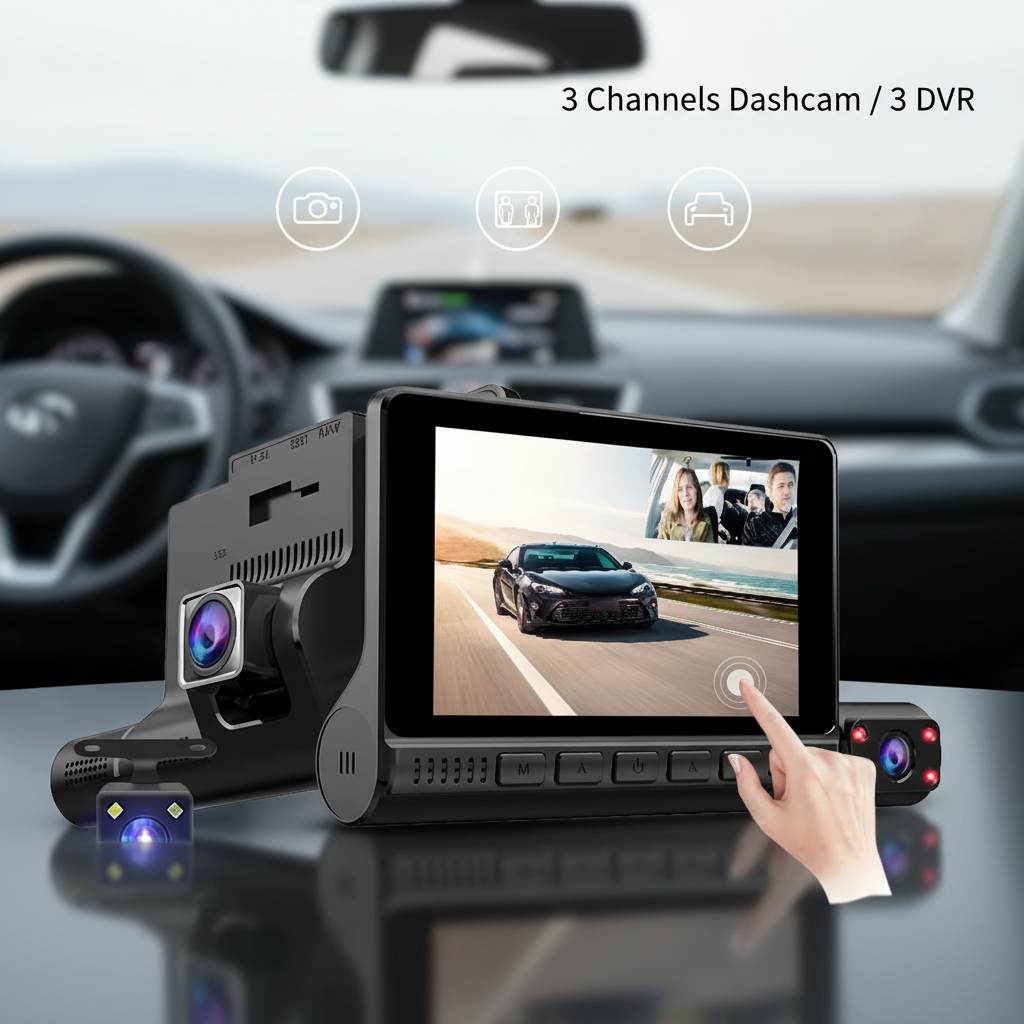
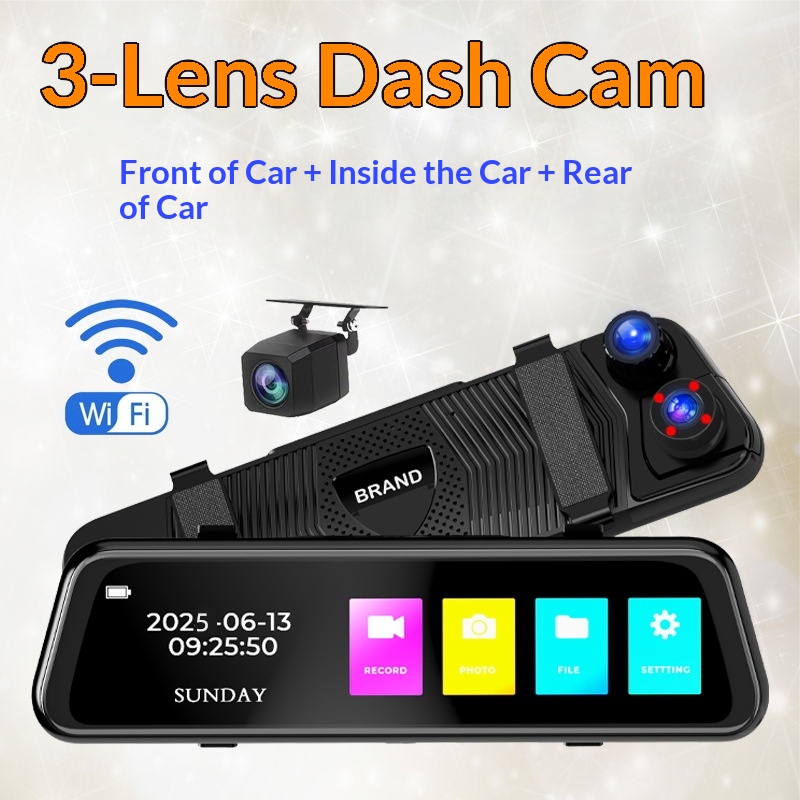
Positioned at the technological hub of Shenzhen, China, Jemrok Industrial Technology (Shenzhen) Co., Ltd. stands out as a dedicated, specialized manufacturer focusing exclusively on vehicle vision solutions, multi-channel dash cameras, car DVRs, streaming media mirror recorders, and heavy-duty reversing camera platforms.
Unlike generalist trading enterprises, Jemrok provides direct factory-to-business manufacturing rigor backed by 6+ years of specialized optical R&D, robust engineering personnel, and dedicated assembly facilities tailored for international B2B clients.
1,500 m² Advanced Production Hub
Our purpose-built Shenzhen factory facility housing automated SMT lines, dust-free optical assembly cleanrooms, and dedicated environmental testing chambers, delivering 300,000 to 500,000 units annually.
Flexible OEM / ODM MOQ (From 50 Sets)
We lower international trade barriers by offering low-volume custom branding options. Custom boot logos, housing silkscreens, firmware menu localization, and custom packaging begin at just 50 sets.
End-to-End International Compliance
All camera systems and recording platforms are engineered in strict compliance with CE, FCC, and RoHS parameters, simplifying clearance procedures and regulatory compliance across Europe, North America, and Australia.
In-House R&D & Engineering Team
Staffed by senior optical, firmware, and mechanical engineers providing real-time technical customer support, hardware redesigns, and rapid prototype turnarounds within 7 to 10 working days.
5. Commercial Vehicle Camera System Procurement FAQ
Below are authoritative technical answers addressing common questions encountered by global importers, fleet procurement leads, and automotive electronics distributors during vendor evaluation:
Q1: What is the main operational difference between IP67, IP68, and IP69K truck cameras?
Answer: While IP67 ratings protect against temporary water submersion up to 1 meter, and IP68 protects against continuous submersion under specified pressure, IP69K is the gold standard for heavy-duty commercial vehicles. IP69K testing subjects the camera housing to high-pressure thermal jet stream cleaning (100 bar pressure at 80°C from multiple angles). For heavy trucks subjected to road salt, mud, and automated high-pressure washdowns, IP69K ratings prevent long-term seal breakdown and internal lens condensation.
Q2: Why is wide-voltage circuit protection (DC 9–36V) critical for heavy trucks?
Answer: Commercial trucks utilize 12V or 24V electrical architectures. However, engine cranking, heavy alternator discharge, and pneumatic brake compressor activations create severe voltage spikes and load dumps exceeding 60V. Industrial-grade truck cameras engineered by Jemrok integrate power protection ICs, TVS surge suppressors, and wide-range DC-DC step-down converters (DC 9–36V) to insulate delicate image sensors against electrical destruction.
Q3: What are the minimum lead times and customization MOQs for OEM orders?
Answer: For standard in-stock product platforms, sample evaluation units ship within 2 business days. Customized OEM orders incorporating silkscreened branding, localized user interface firmware, and custom box printing require an MOQ of 50 to 100 sets, with mass production completed in 15 to 20 working days following sample sign-off.
Q4: How do wired AHD systems compare against 2.4G Digital Wireless systems for long semi-trailers?
Answer: Wired 4-Pin DIN cabling provides 100% stable video transmission with zero signal latency, making it the preferred solution for permanent rigid truck chassis. Digital Wireless systems utilizing FHSS encryption are optimal for removable trailers, tractor-trailers, and agricultural rigs where pulling physical cables through the fifth-wheel coupling is impractical. Modern digital wireless handles transmission distances up to 300 meters in open line-of-sight without inter-fleet cross-talk.
6. Technical Benchmarks & Testing Verification Criteria for Fleet Importers
To ensure incoming shipments satisfy high quality standards, global procurement teams should enforce strict incoming inspection protocols (AQL Standard Level II). Below are critical technical verification checkpoints recommended by Jemrok's quality control laboratory:
Thermal Cycling Endurance: Verify camera functionality across cold boot (-30°C) and elevated temperature exposure (+85°C) inside environmental testing chambers for a minimum of 48 continuous hours.
Vibration & Mechanical Shock Isolation: Test housing structural integrity according to MIL-STD-810G or ISO 16750-3 vibration profiles simulating rough road conditions across X, Y, and Z axes.
Water Ingress & Nitrogen Sealing Verification: Ensure internal camera cavities are backfilled with dry nitrogen or sealed using hydrophobic membranes to prevent fogging when transitioning between warm daylight and freezing night operational temperatures.
EMC & EMI Emission Testing: Confirm that camera power regulators and high-frequency video clock signals do not disrupt truck CB radios, GPS navigation antennas, or onboard tachographs.
Summary for Global Partners: By partnering directly with a dedicated manufacturing specialist like Jemrok Industrial Technology, importers and fleet service providers gain direct engineering access, rapid custom iteration, and dependable automotive-grade hardware engineered specifically for complex commercial transport environments.
Partner with China’s Premier Truck Camera System Manufacturer
Looking for reliable OEM/ODM fleet safety solutions, customized firmware, or high-durability AHD truck camera systems? Consult directly with our engineering and trade support team today.