Industry-Grade Commercial Vehicle Cameras & Accessories
Tested platforms tailored for private label customization, international automotive distributors, fleet managers, and commercial transport OEM/ODM deployments.

1. Strategic Baseline: The Evolution of Commercial Vehicle Cameras
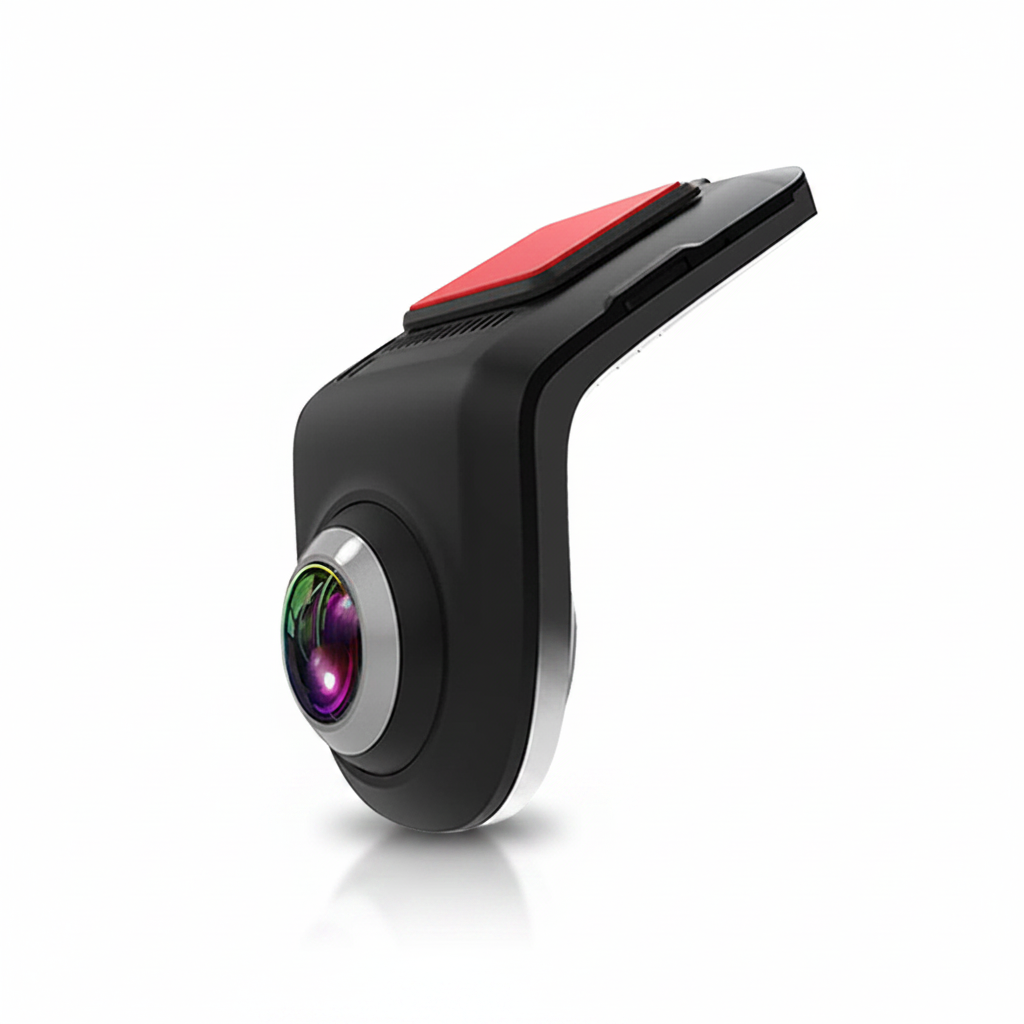
The global commercial transport and logistics sector is experiencing an unprecedented structural pivot towards advanced telematics, automated fleet risk management, and mandatory safety compliance standards. Modern commercial vehicle cameras are no longer standalone video recording devices; they have evolved into essential edge-computing IoT endpoints within smart fleet ecosystems. Devices mounted on heavy-duty trucks, delivery vans, municipal buses, and ride-share vehicles must withstand environmental stresses that far exceed the engineering tolerances of consumer car electronics.
A true commercial-grade vehicle camera must maintain operational continuity under extreme thermal fluctuations (ranging from -20°C ambient winter cold up to +70°C internal cabin heat), continuous low-frequency chassis vibration, severe electrical transients (such as load dump spikes up to 36V in commercial battery rigs), and aggressive ingress hazards (dust, high-pressure washdowns, and salt spray exposure). Factories operating in this specialized niche must combine optical precision engineering with heavy-duty automotive electronics assembly.
SEO & Technical Benchmark: Commercial vehicle camera procurement managers must evaluate suppliers based on ISO 16750 electrical test compliance, IP68/IP69K sealing ratings, low-light signal-to-noise ratio (SNR) optical sensors, and CAN-bus telematics software compatibility rather than consumer retail aesthetics.
2. Enterprise Manufacturing Profile: Jemrok Industrial Technology
As a leading China-based commercial vehicle camera manufacturer and global exporter, Jemrok Industrial Technology (Shenzhen) Co., Ltd. operates at the epicenter of global electronic hardware innovation. Located in Shenzhen, Guangdong, Jemrok has devoted over six years of dedicated R&D to solving critical vision challenges across driving, reversing, cabin monitoring, and blind-spot monitoring environments.
Jemrok operates a modern 1,500 square meter standardized manufacturing facility staffed by 30 to 50 dedicated automotive vision specialists, including a core engineering R&D team of 5 to 10 hardware and firmware developers. With an annual production capacity reaching 300,000 to 500,000 units, Jemrok serves top-tier distributors, fleet solution providers, automotive aftermarket brands, and e-commerce importers across North America, Europe, Asia, Oceania, and Latin America.
Certified Compliance
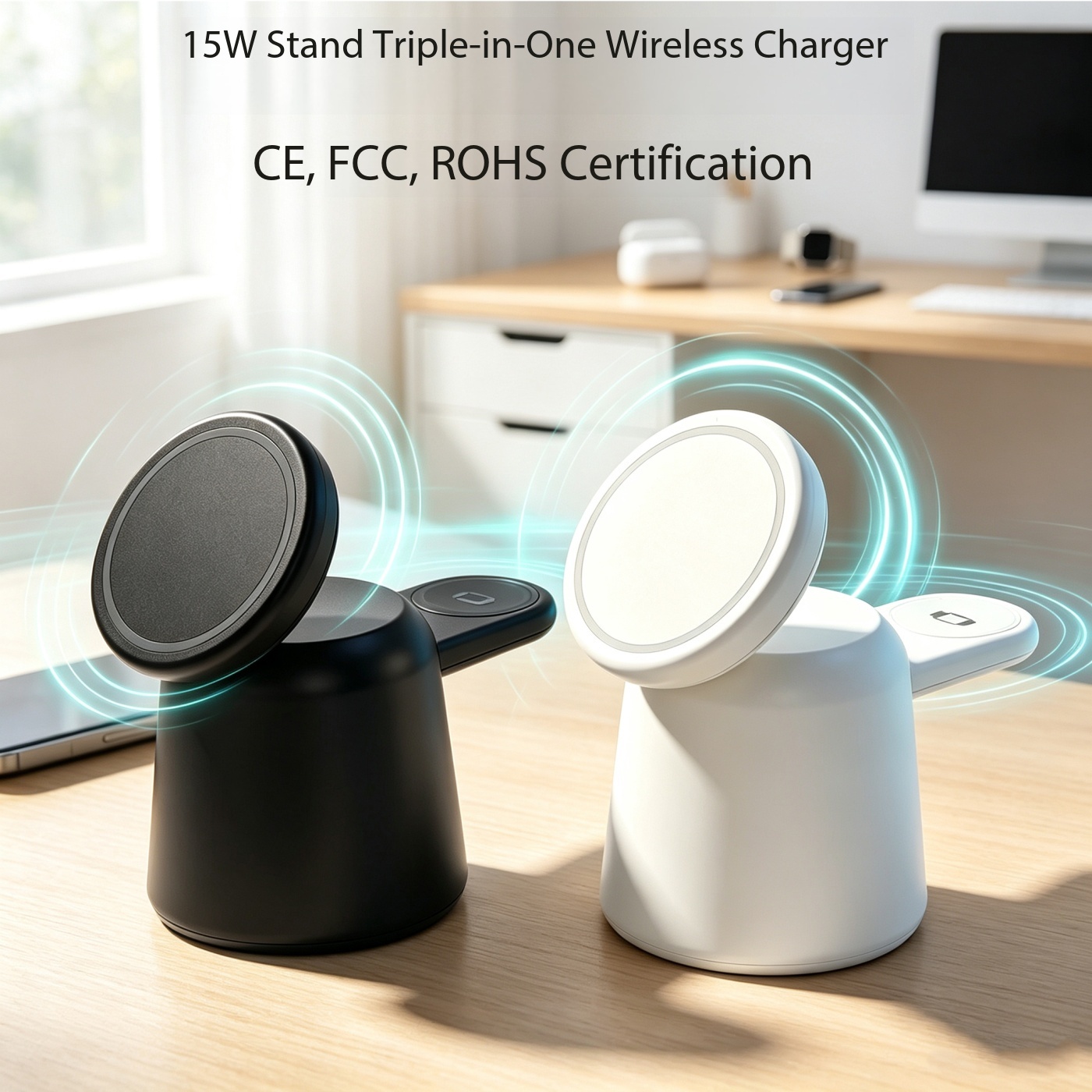
Full production compliance with international standards including CE, FCC, and RoHS directives, accelerating customs clearance and marketplace compliance.
OEM / ODM Agility
Flexible manufacturing workflows supporting private label branding, boot-screen firmware modification, and housing re-engineering starting from a minimal order quantity of 50 sets.
Rapid Market Introduction
Quarterly product releases powered by in-house optical tuning ensure clients remain ahead of market trends, reducing time-to-market for new commercial camera SKUs.
3. Technical Comparison: Commercial vs Consumer Cameras
Understanding the precise technical delta between retail consumer dash cams and commercial vehicle cameras is vital for global B2B procurement decisions. The following matrix illustrates key engineering parameters verified by Jemrok's quality assurance lab:
| Engineering Dimension | Consumer Dash Cameras | Commercial Vehicle Cameras (Jemrok Standard) |
|---|---|---|
| Operating Voltage | Fixed 5V USB / 12V Lighter Adapter | 12V – 36V Wide Voltage Range with TVS Surge Protection |
| Ingress Protection (IP) | Non-sealed (IP50 cabin use only) | IP68 / IP69K Hermetic Sealing with Nitrogen Injection |
| Video Signal Transmission | Ribbon Cables / USB 2.0 (Short Distance) | AHD (Analog High Definition) / Aviation 4-Pin Screwed Connectors |
| Vibration Endurance | Basic Consumer Plastic Clips | ISO 16750-3 Heavy Commercial Chassis Shock & Vibration Rated |
| Lens Optics & Sensor | Standard Plastic/Glass Hybrid (4G/6G) | Full 6-Glass All-Glass IR Lens with Sony STARVIS Night Vision SNR |
| Thermal Storage Limits | -10°C to +60°C (Risk of Battery Swell) | -30°C to +85°C (Supercapacitor Safety Architecture) |
4. Strategic Procurement Trends in Commercial Vehicle Cameras (2025–2030)
As regulatory bodies globally enforce stricter commercial transport safety policies—such as the European Union’s General Safety Regulation II (GSR II) and FMCSA blind-spot mitigation guidelines in North America—procurement officers must align their inventory strategy with upcoming technological shifts. Five primary trends are defining the future of commercial vehicle camera manufacturing:
Trend 1: Edge AI-Driven ADAS and Driver Monitoring Systems (DMS)
The modern commercial vehicle camera is evolving from a passive video recorder into an active edge-computing safety co-pilot. Embedded System-on-Chip (SoC) platforms (such as Allwinner V533, Novatek, and HiSilicon processing nodes) now execute real-time computer vision algorithms directly within the camera hardware. Advanced Driver Assistance Systems (ADAS) deliver instant acoustic and visual alerts for Lane Departure Warnings (LDW), Forward Collision Warnings (FCW), and Headway Monitoring Systems (HMS). Simultaneously, interior cabin cameras equipped with Driver Monitoring Systems (DMS) track facial geometry to identify early signs of driver fatigue, distraction, mobile phone usage, or seatbelt non-compliance, transmitting instant exception alerts to remote fleet operations centers.
Trend 2: Multi-Channel 360° Surround View & Blind Spot Detection (BSD)
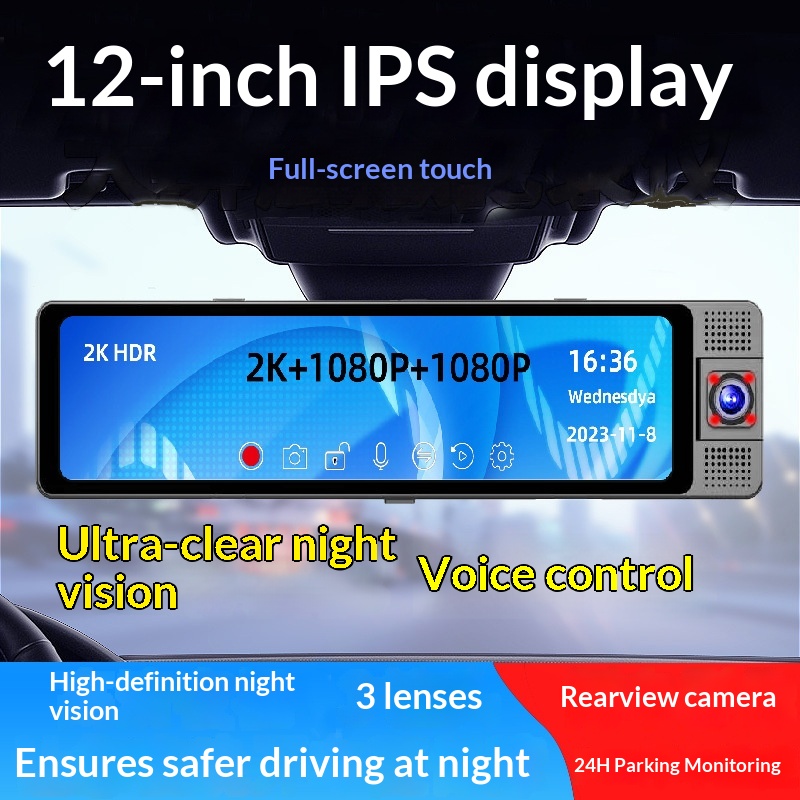
Single-channel front dash cams are rapidly being replaced by multi-channel multi-angle systems. Heavy commercial vehicles, articulate trucks, and city transit buses present large blind zones where vulnerable road users (VRUs) such as cyclists and pedestrians are at risk. Sourcing trends favor 3-channel, 4-channel, and 8-channel synchronized setups. These systems combine front 2K recording, wide-angle interior cabin monitoring, side-blind-spot cameras, and heavy-duty rear backup cameras into a unified streaming recorder or quad-split IPS display, eliminating vehicle blind spots entirely.
Trend 3: Supercapacitor Power Delivery Architecture
Lithium-ion batteries present severe fire hazards when subjected to continuous direct sunlight through commercial windshields or when operated in heavy commercial vehicle duty cycles. Enterprise buyers are shifting exclusively toward supercapacitor-based power delivery systems. Supercapacitors offer exceptional thermal stability, enduring extreme ambient temperatures (-20°C to +70°C) while eliminating the risk of battery swelling, thermal runaway, or explosive rupture. Furthermore, supercapacitors provide continuous power backup to ensure emergency video file closing during sudden power disconnections.
Trend 4: Low-Latency AHD and High-Bandwidth Wireless Cloud Telematics
Commercial transport fleets require uninterrupted, real-time video transmission. Analog High Definition (AHD) technology has established itself as the preferred standard for wired camera-to-monitor transmission, delivering uncompressed 720P/1080P video across distances up to 50 meters over heavy-gauge 4-pin aviation cables without video delay or electromagnetic interference. Concurrently, dash cams featuring high-speed 5G/4G LTE connectivity and 5G Wi-Fi facilitate real-time cloud backup, automatic emergency event uploads, remote live viewing, and over-the-air (OTA) firmware updating via dedicated fleet management software.
Trend 5: Heavy-Duty IP69K Waterproofing & Mechanical Structural Ruggedization
External commercial cameras mounted on trailers, chassis side-rails, or rear license frames face continuous exposure to severe road wash, pressure-steam cleaning, mud, oil, and atmospheric moisture. Modern manufacturing protocols demand IP69K ingress protection ratings—the highest protection standard available—ensuring complete resistance against high-pressure washdown sprays at close range. Heavy-duty die-cast zinc alloy or aluminum housings treated with anti-corrosion powder coatings prevent housing degradation over years of heavy highway usage.
5. Quality Assurance & Testing Protocols at Jemrok Factory
Information gain and reliability are built on verifiable quality control standards. At Jemrok’s Shenzhen factory, every commercial vehicle camera undergoes rigorous multi-stage technical testing prior to export packing:
Optical Calibration
Precision focus chart alignment ensures crisp resolution across the entire 170-degree ultra-wide optical field, avoiding edge blur.
Thermal Stress Testing
100% of finished camera PCBA modules undergo 8 to 24 hours of continuous burn-in aging inside environmental climate chambers at 65°C.
Water Immersion Test
External reverse cameras and truck camera modules are tested under pressurized water tanks to verify zero fluid leakage.
6. Comprehensive Commercial Vehicle Camera Procurement FAQ
Ready to Source High-Reliability Commercial Vehicle Cameras?
Partner directly with Shenzhen’s premier vehicle camera factory. Request customized factory-direct pricing, sample evaluations, or OEM/ODM engineering consultations today.