Featured OEM HD Car Cameras & Smart Mounts
Explore our factory-direct, highly customizable automotive video recording hardware, wireless power delivery mounts, and multi-channel vehicle monitoring cameras built for global tier-1 brands and fleet suppliers.
Industrial Whitepaper: Engineering Next-Gen OEM HD Car Cameras
An authoritative analysis of automotive video recorder design, CMOS sensor optics, image signal processing (ISP) pipelines, and manufacturing standards for commercial B2B procurement.
Key Technical Insight for Volume Buyers
In modern automotive electronics sourcing, standard 1080p video capture is no longer a point of differentiation. High-reliability OEM HD car cameras demand optimized optical stack design (6G/7G full-glass lenses), high-dynamic-range (HDR) signal pipelines with dynamic range exceeding 120dB, and localized Neural Processing Units (NPU) for real-time edge computing. OEMs must balance thermal dissipation in sealed IP68 enclosures with high-bandwidth streaming stability.
Advanced Optoelectronic Assemblies & CMOS Sensors
The core image quality of a custom OEM car DVR depends on sensor photodiode efficiency and glass precision. Utilizing industry-leading sensors such as Sony STARVIS 2 (IMX675/IMX335) combined with wide apertures (f/1.6 to f/1.8), our camera builds achieve near-infrared sensitivity. Multi-layer anti-reflective optical coatings eliminate dashboard flare and windshield refraction, guaranteeing crisp licence-plate readability even at low illuminance (0.001 Lux).
Multi-Channel Synchronization & ISP Tuning
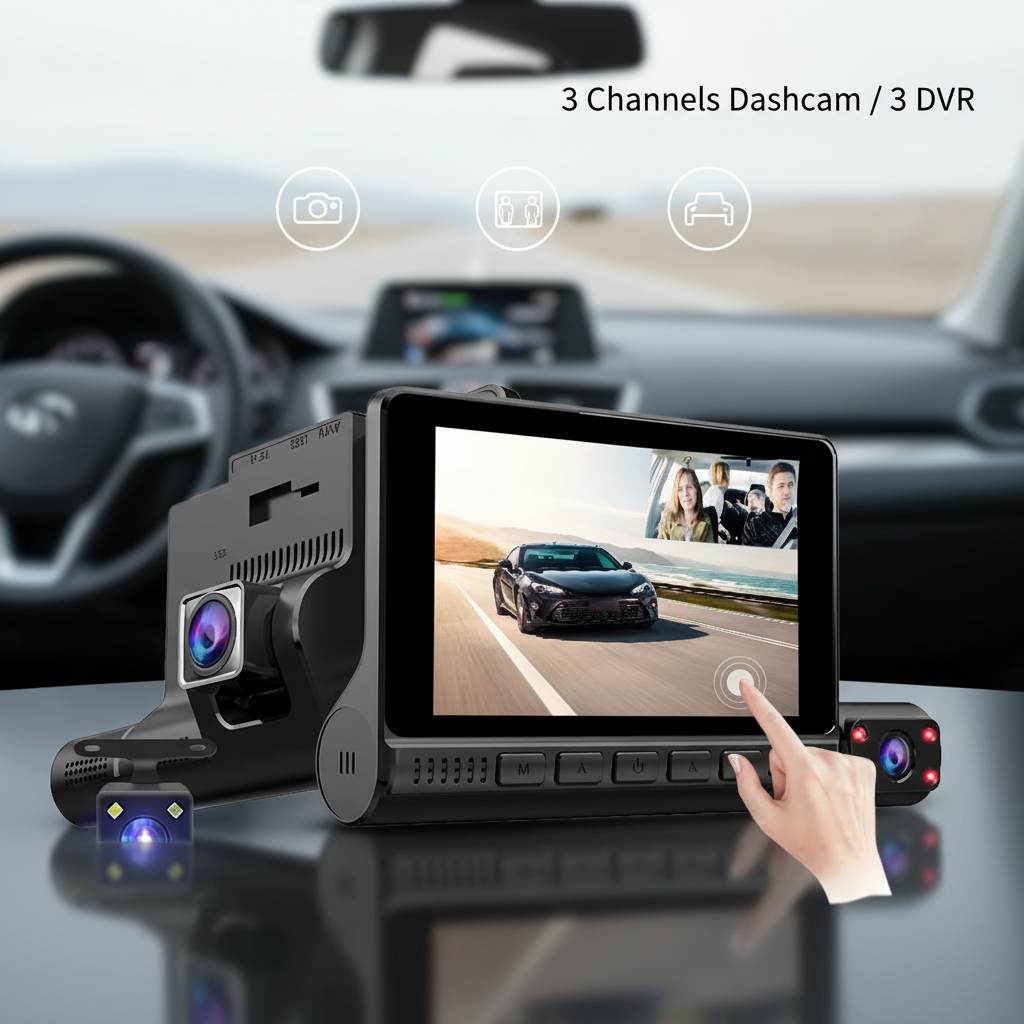
Complex vehicle safety architectures rely on multi-camera topologies (Front 2K/4K + Cabin 1080P + Rear AHD 1080P). Coordinating multiple image streams without frame drops requires dual-core digital signal processors (DSPs) with automated white balance (AWB), 3D noise reduction (3DNR), and pixel-level WDR tuning. Custom ISP algorithms normalize light exposure rapidly when transitioning into dark tunnels or under direct glare.
Thermal Resilience & Power Architecture
Automotive interiors experience extreme operating temperatures from -20°C to +70°C (-4°F to 158°F). OEM dash cameras engineered by Jemrok replace failure-prone lithium-ion batteries with high-capacity supercapacitors. Coupled with wide-voltage buck converter circuits (12V–24V input with over-voltage and surge protection), our vehicle video hardware promises multi-year operational reliability without thermal expansion risks.
Enterprise Capabilities & OEM/ODM Manufacturing Excellence
Rooted in Shenzhen's high-tech manufacturing ecosystem, Jemrok Industrial Technology brings over 6 years of hyper-focused R&D expertise to global automotive OEM brands, commercial fleets, and electronic importers.
Agile OEM/ODM Customization
From initial circuit board (PCBA) layout, optical lens select, housing tooling, to localized firmware menu design, boot logo branding, and customized retail gift box packaging. Custom OEM orders start from as low as 50 sets, allowing rapid market entry and minimal inventory exposure.
Strict Quality Control & Aging Tests
Every camera unit undergoes rigorous multi-stage quality control, including vibration testing simulating rough road conditions, 48-hour continuous thermal burn-in aging, optical resolution chart calibration, and IP68 waterproof chamber immersion tests for external rear/commercial cameras.
In-House Automotive R&D Team
Our engineering team comprises seasoned firmware developers, optical specialists, and structural engineers. We release innovative camera platforms quarterly, incorporating cutting-edge chipsets from Novatek, MStar, and Allwinner to keep our clients ahead of market competitors.
Future Procurement & Product Development Trends
Strategic insights for automotive buyers preparing their product pipelines for next-generation consumer and commercial market demands.
1. Convergence of Edge-AI (ADAS & DMS)
Future dash cam procurement is shifting rapidly toward intelligent vision. Integrated AI NPUs perform real-time lane departure warnings (LDWS), forward collision alerts (FCWS), and Driver Monitoring Systems (DMS) detecting fatigue and distraction. OEM buyers should select platforms with scalable NPU compute capacity.
2. High-Bandwidth 5G WiFi & Cloud Telematics
Legacy Wi-Fi transfer speeds create user friction during 4K video downloads. Modern B2B sourcing prioritizes 5GHz Wi-Fi modules and 4G/5G IoT telematics integrations. Real-time GPS tracking, cloud event backup, and remote live-view capabilities are rapidly becoming mandatory specs for commercial fleet contracts.
3. Seamless 360° Panoramic & Multi-Channel Coverage
Driven by ride-share regulations (Uber/Lyft) and fleet liability protection, 3-channel (Front + Cabin + Rear) and 4-channel 360-degree omnidirectional recording systems are replacing standard front-only recorders. Wide dynamic range cabin lenses with invisible 940nm IR LEDs represent high-growth procurement categories.
OEM Procurement FAQ
Answers to essential technical, legal, and operational questions asked by international buyers, brand managers, and fleet sourcing agents.
Request Your Custom OEM Camera Product Catalog & Wholesale Price List
Partner directly with a certified Shenzhen dash camera factory. Contact our engineering and sales consultancy team today to receive detailed technical datasheets, factory assessment reports, and customized OEM quotations.