China Wholesale Night Vision Backup Camera Manufacturing: An Executive Sourcing Intelligence Report
The global automotive aftermarket and fleet safety monitoring industry is experiencing a monumental paradigm shift. As road safety regulations tighten across Europe, North America, and Asia-Pacific—evidenced by mandates such as the EU's General Safety Regulation (GSR II) and enhanced commercial transport safety directives—the procurement demand for high-performance China wholesale night vision backup camera systems has surged exponentially. Modern buyers are no longer seeking basic low-resolution composite video feeds; today’s tier-1 distributors, fleet managers, and automotive OEM importers demand sub-lux illumination sensitivity, high dynamic range (HDR), Analog High Definition (AHD) noise-suppressed signal delivery, and rugged IP69K environmental resilience.
This comprehensive white paper serves as an authoritative technical procurement guide. Prepared by senior automotive electronics engineers and supply chain strategists in Shenzhen, Guangdong—the world's epicenter for electro-optical vision manufacturing—it breaks down sensor physics, lens architecture, signal transmission protocols, manufacturing compliance, and future procurement strategies required to establish a profitable, fault-tolerant automotive camera product line.
Information Gain Note for Automotive B2B Importers
When evaluating Chinese night vision camera manufacturers, assessing raw resolution (e.g., 720P vs. 1080P) is insufficient. Signal integrity, lux ratings at 0.001 Lux, Image Signal Processor (ISP) dynamic tuning, lens thermal shift stabilization, and power surge suppression over a 12V–36V range are the decisive variables that prevent field returns and brand erosion.
1. The Optical and Electronic Architecture of Night Vision Cameras
Night vision in automotive rear-view cameras relies on two foundational technologies: Active Infrared (IR) Illumination and Passive Starlight Ultra-Low Light CMOS Processing. Understanding the trade-offs between these two optical pathways is critical for selecting the right inventory for your target market segment.
A. Active Infrared (IR) Night Vision Engineering
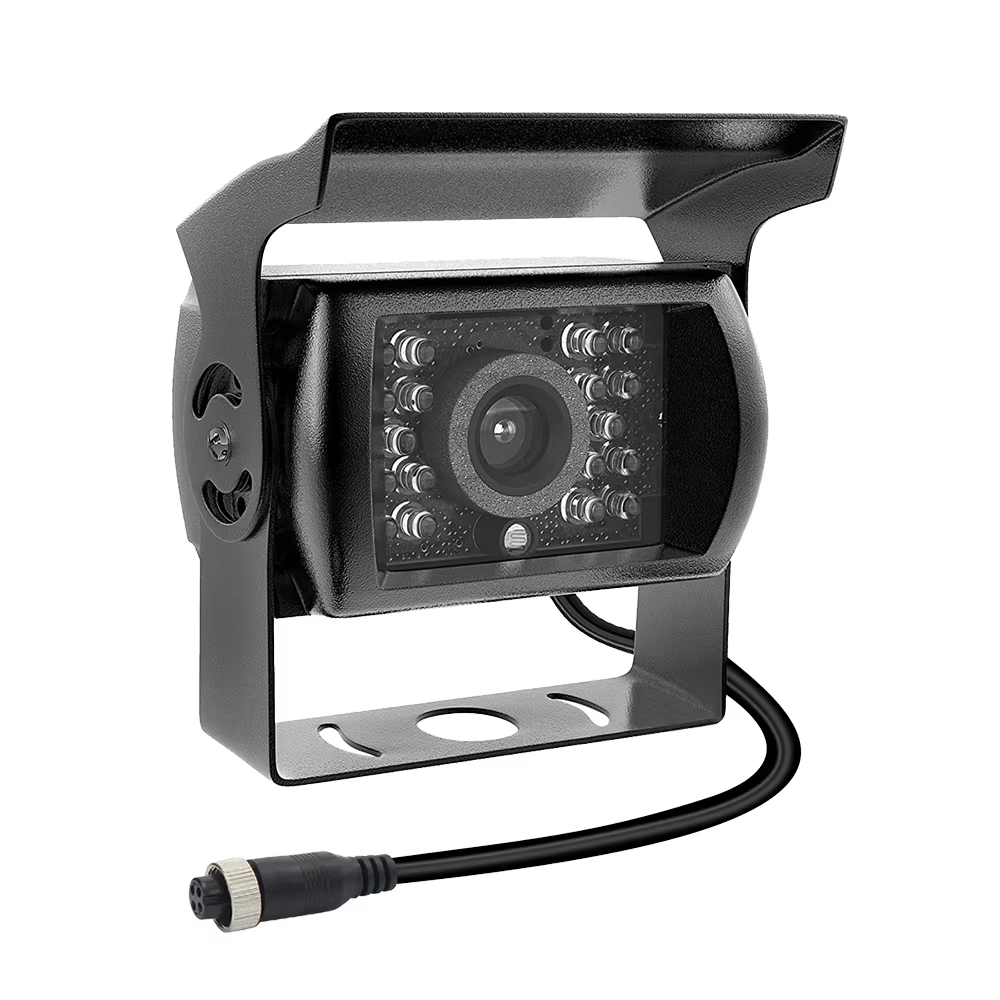
Infrared night vision utilizes an array of Surface-Mounted Device (SMD) IR Light Emitting Diodes (LEDs) positioned surrounding the lens housing. These LEDs emit invisible light typically at the 850nm or 940nm spectrum.
- 850nm Wavelength: Provides superior illumination distance (up to 15–20 meters in complete pitch darkness), making it ideal for heavy-duty commercial trucks, buses, and trailers. However, it produces a faint red glow visible to the human eye at close range.
- 940nm Wavelength: Completely invisible to human sight, rendering it optimal for discrete cabin monitoring or security applications, though offering approximately 30% shorter illumination range compared to 850nm.
B. Passive Starlight Low-Light CMOS Sensors
Starlight technology represents the gold standard for passenger vehicles and high-end fleet monitoring. Utilizing advanced back-illuminated CMOS architecture—such as the Sony STARVIS™ and STARVIS 2™ series, or high-tier OmniVision and Aptina sensors—starlight cameras feature enlarged pixel physical area (e.g., 2.9µm × 2.9µm pixel pitch). Coupled with an ultra-wide aperture lens (typically F1.4 or F1.6) and advanced digital signal noise reduction (3D-DNR), starlight cameras capture full-color video under ambient moonlight or streetlight conditions (0.001–0.01 Lux) without requiring active IR LED emission.
| Performance Metrics | Active Infrared (IR) Array | Starlight Low-Light CMOS | Standard CVBS / Entry CMOS |
|---|---|---|---|
| Minimum Illumination | 0.000 Lux (With IR active) | 0.001 - 0.005 Lux | 0.5 - 1.0 Lux |
| Night Color Output | Monochrome (Black & White) | Full Color (Near-ambient) | Grainy Color / High Noise |
| Optimal Application | Heavy Trucks, Logistics, Cargo Vans | Passenger Cars, Taxis, Light Fleets | Budget Retail Replacement |
| Power Consumption | Higher (When IR LEDs ignite) | Ultra-Low Constant Wattage | Low |
| Thermal Heat Dispersal | Requires Aluminum/Zinc Alloy Heatsink | Standard Passive Dissipation | Minimal Thermal Impact |
| Lens Aperture Specs | F1.8 - F2.0 Glass Lenses | F1.4 - F1.6 All-Glass 6G Lens | F2.2 Hybrid Plastic/Glass |
2. High Dynamic Range (HDR) & WDR: Solving Headlight Glare
One of the primary failure points of generic backup cameras is severe image blooming or whiteout caused by trailing vehicle headlights or direct streetlamp exposure at night. When a trailing truck's high beams strike a rear camera, standard sensors overexpose the image, blinding the driver's display console.
Professional grade night vision backup cameras produced by top Shenzhen factories incorporate hardware-level Wide Dynamic Range (WDR) or dual-exposure frame-stitching High Dynamic Range (HDR) processors. By capturing multi-exposure frames simultaneously (a short exposure for bright headlight zones and a long exposure for dark shadow areas), the internal Image Signal Processor (ISP) merges them pixel-by-pixel. The output is a balanced, highly legible video stream where license plates, road markings, and pedestrians are clearly discernible despite harsh headlight glare.
AHD Signal Transmission
Analog High Definition (AHD) allows uncompressed 720P, 1080P, or 2K video to travel up to 30 meters over standard coaxial cabling without signal attenuation, latency, or image dropouts—a paramount requirement for articulated trucks and buses.
IP69K Extreme Ingress Protection
Factory-sealed metal housings undergo rigorous thermal shock submersion testing. The IP69K standard ensures immunity against high-pressure steam jet cleaning (100 bar at 80°C), road salt corrosion, and sub-zero ice buildup.
12V–36V Transient Voltage Protection
Commercial vehicle electrical architectures experience significant voltage spikes during ignition and alternator load changes. Integrated TVS (Transient Voltage Suppressor) diodes guard sensitive camera logic boards up to 40V surge peaks.
3. Global Procurement & Future Sourcing Trends (2025–2030)
As an automotive technology buyer or enterprise distributor, aligning your sourcing strategy with upcoming engineering trends is crucial to maintaining product differentiation and protecting your inventory margins against rapid obsolescence. Key macro trends shaping the night vision backup camera sector include:
A. Transition from Analog CVBS to AHD & Digital Wireless Protocols
Legacy Composite Video Blanking and Sync (CVBS) resolution (NTSC/PAL 480TVL) is rapidly disappearing from global markets. The industry baseline has permanently migrated to 1080P AHD (2.0 Megapixel). Furthermore, for heavy equipment, agricultural machinery, and long-haul transport where running physical cables is cost-prohibitive, enterprise buyers are migrating toward 2.4GHz Digital Frequency Hopping (FHSS) and 5.8GHz Wi-Fi cameras. These digital wireless units transmit encrypted, zero-interference video up to 100 meters in direct line-of-sight.
B. AI-Powered Blind Spot Detection (BSD) Integration
Modern night vision backup cameras are evolving from passive image relay tools into active hazard detection platforms. By embedding System-on-Chip (SoC) Neural Processing Units (NPUs) directly inside the camera housing or screen recorder module, next-generation cameras perform real-time human and vehicle identification. When an object enters a commercial truck's rear blind spot at night, the system overlays visual warnings and triggers audible cabin buzzers to prevent low-speed reversing collisions.
C. Environmental, Social, and Governance (ESG) & Regulatory Compliance
Global customs authorities and enterprise fleet clients now enforce strict regulatory benchmarks. Products exported from China must fully comply with CE, FCC, RoHS, REACH directives, and hold verified E-Mark (E9/E11/E24) certifications for legal installation across the European Union. Furthermore, buyers are favoring manufacturing partners using lead-free soldering processes, recycled aluminum alloy enclosures, and energy-efficient SMT assembly lines.
4. Enterprise Advantage: Jemrok Industrial Technology (Shenzhen) Co., Ltd.
Navigating the vast ecosystem of Chinese electronics manufacturers requires a partner with verified manufacturing capabilities, specialized optical R&D engineering, and reliable quality control. Jemrok Industrial Technology (Shenzhen) Co., Ltd. stands as a premier specialized manufacturer dedicated strictly to automotive camera, dash cam, and vehicle safety monitoring solutions.
Focused Optical & Firmware Engineering Expertise
Unlike generalist trading firms or broad consumer electronics factories, Jemrok has spent over 6 years refining automotive vision systems. Our in-house engineering team (5–10 R&D specialists) handles full-stack custom development—including custom ISP tuning for extreme low-light clarity, custom boot screens, user interface localization, and rigid circuit board layout optimization.
Controlled Manufacturing Capacity & Scalability
Operating a modernized 1,500 m² assembly plant in Shenzhen, Guangdong, Jemrok achieves an annual production capacity of 300,000 to 500,000 camera and DVR units. Every assembly line integrates anti-static ESD protections, dust-free lens calibration stations, automated aging testing chambers, and waterproof testing equipment.
Flexible OEM/ODM Business Frameworks
Recognizing that distributors need to manage capital risk, Jemrok supports low Minimum Order Quantities (MOQ starting at 50 sets for custom branding). We provide full turnkey white-label packaging, silk-screen logo printing, custom firmware branding, and rapid sample prototyping within 5 to 7 business days.
End-to-End International Quality Compliance
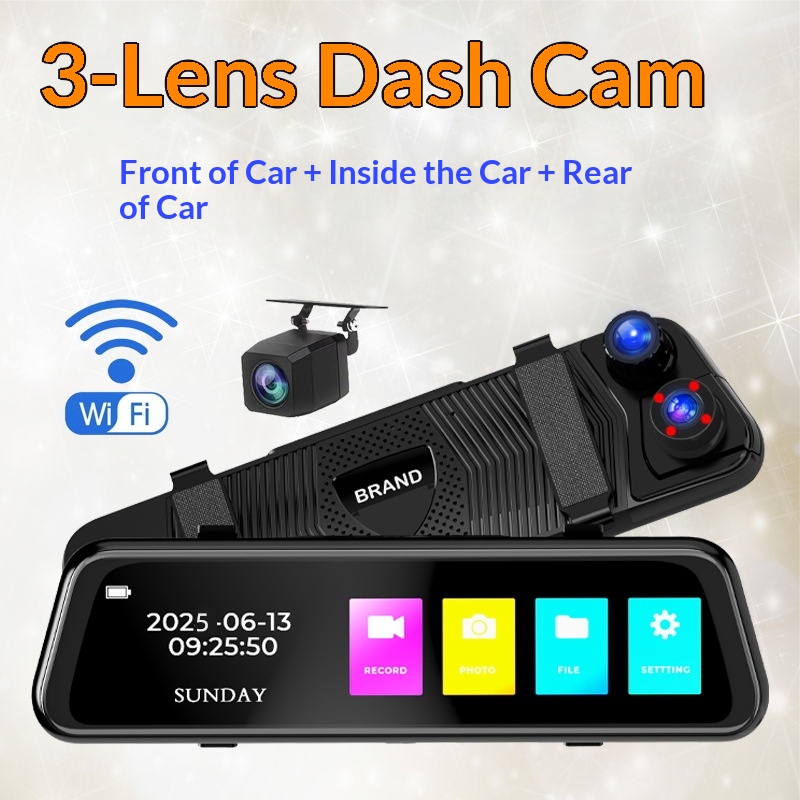
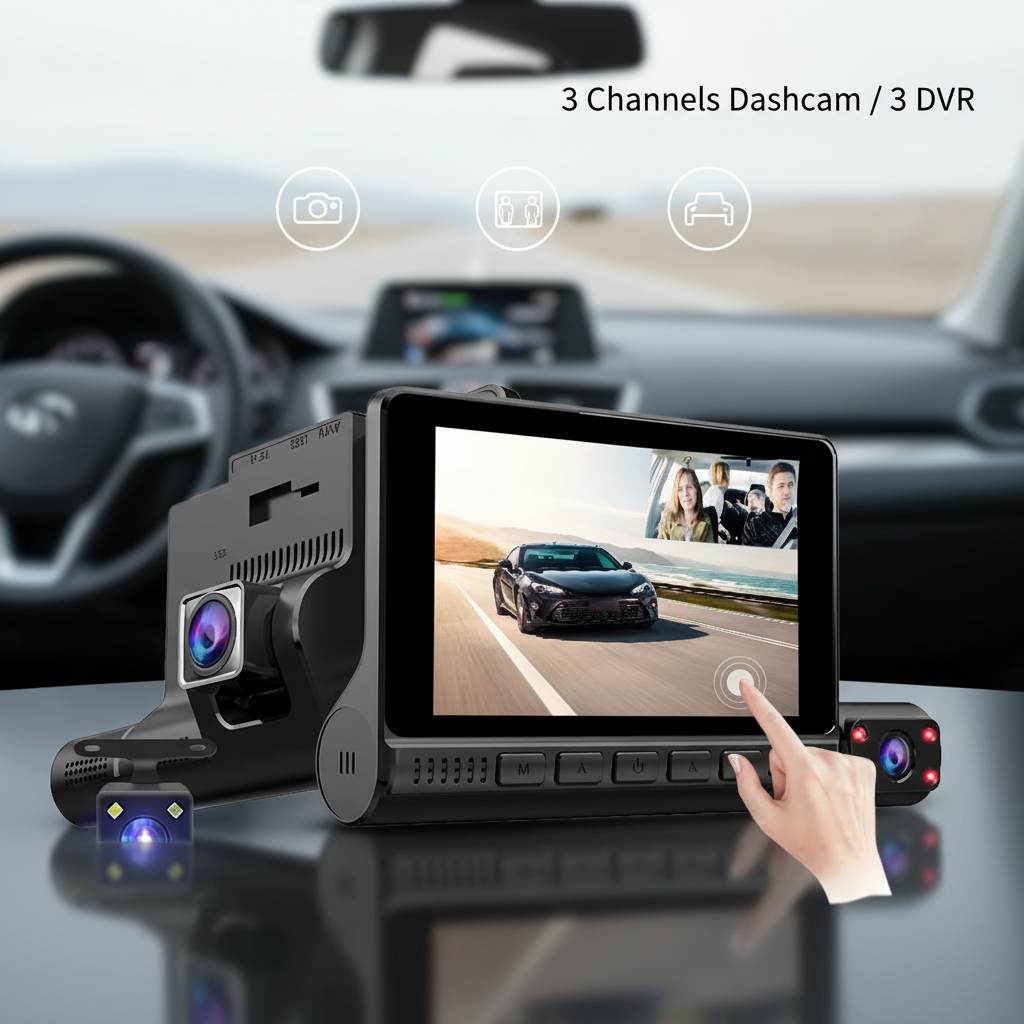
All Jemrok night vision cameras, streaming mirror recorders, and multi-channel truck cameras are manufactured in compliance with international export criteria, including CE, FCC, and RoHS standards. Comprehensive quality control reports and raw material traceability guarantee sub-0.5% defect rates upon destination arrival.
Jemrok's driving mission is simple: to empower global automotive brands, fleet management operators, and aftermarket distributors with rock-solid driving, reversing, and parking safety products direct from our Shenzhen factory floor.
5. Frequently Asked Questions (FAQ) for B2B Importers
Q1: What is the minimum order quantity (MOQ) for OEM customized night vision backup cameras?
For custom OEM/ODM production (including logo printing on camera housings, customized boot screens, localized user manuals, and branded retail packaging), our standard MOQ starts at just 50 sets. For evaluation samples or standard unbranded inventory, we support sample orders starting from 2 pieces to facilitate product testing and field trials.
Q2: How do you prevent water condensation and lens fogging in cold or humid environments?
Fogging occurs when moist air is trapped inside the camera housing during assembly and condenses under temperature drops. Jemrok prevents this through a dual-defense process: First, all high-duty commercial cameras are assembled in climate-controlled environments and injected with thermal structural sealant. Second, housings undergo 100% pressure-differential gas seal testing and thermal shock testing (-30°C to +85°C) to guarantee an IP68/IP69K hermetic seal.
Q3: Should I source AHD 1080P or CVBS cameras for my local aftermarket distribution?
If your end-customers are installing cameras alongside modern Android head units, touchscreen monitors, or commercial fleet DVRs, AHD 1080P is highly recommended due to its vastly superior color fidelity and clarity. If you supply legacy monitors or older vehicle replacement parts, we offer dual-mode cameras featuring a switchable cut-wire loop (allowing the camera to toggle between AHD 1080P/720P and CVBS signals seamlessly).
Q4: What is the typical lead time for mass production and global shipping?
Standard sample orders are dispatched within 2 to 4 business days. Custom OEM mass production runs typically require 12 to 18 days depending on packaging complexity and order volume. We maintain strong partnerships with global express carriers (DHL, FedEx, UPS) as well as air and sea freight forwarders offering DDP (Delivered Duty Paid) services directly to your regional warehouse.
Q5: How does Jemrok handle warranty claims and defective product replacement?
Jemrok provides a comprehensive 12-month factory warranty on all automotive camera systems and dash cam products. Due to our stringent 100% multi-stage factory inspection protocol, our field defect rate is maintained strictly below 0.3%. In the rare event of a manufacturing defect, replacement units or spare components are immediately included in your next shipment or air-freighted directly to minimize downtime.