Wholesale AHD Cameras & Vehicle Electronics Solutions
Direct factory supply for automotive importers, fleet managers, and aftermarket distributors worldwide.

Enterprise Capacity & OEM/ODM Manufacturing Excellence
Jemrok Industrial Technology (Shenzhen) Co., Ltd. is a specialized China manufacturer dedicated to advanced vehicle vision and recording electronics.
In-House Optical Engineering
Dedicated R&D engineers specializing in ISP tuning, CMOS low-light sensor optimization, and multi-lens synchronicity.
Strict Quality Assurance
Automated SMT placement, high-temperature thermal aging testing, IP68/IP69K waterproof immersion chambers, and ESD surge protection.
Full Customization Support
Turnkey OEM/ODM customization covering custom firmware parameters, logo silkscreening, UI multilingual translation, and custom packaging designs.
1. Technical Architecture & Principles of Automotive AHD Cameras
Analog High Definition (AHD) technology represents a monumental leap in automotive visual surveillance, bridging the gap between legacy CVBS (Color, Video, Blanking, and Sync) composite analog systems and modern digital IP networks. Designed specifically for vehicular operating environments characterized by heavy electromagnetic interference (EMI), voltage fluctuations, and long wiring runs, AHD utilizes high-frequency carrier modulation to transmit uncompressed HD video resolutions (720P, 1080P, and up to 4K) over coaxial cables or shielded twisted pair (STP) lines.
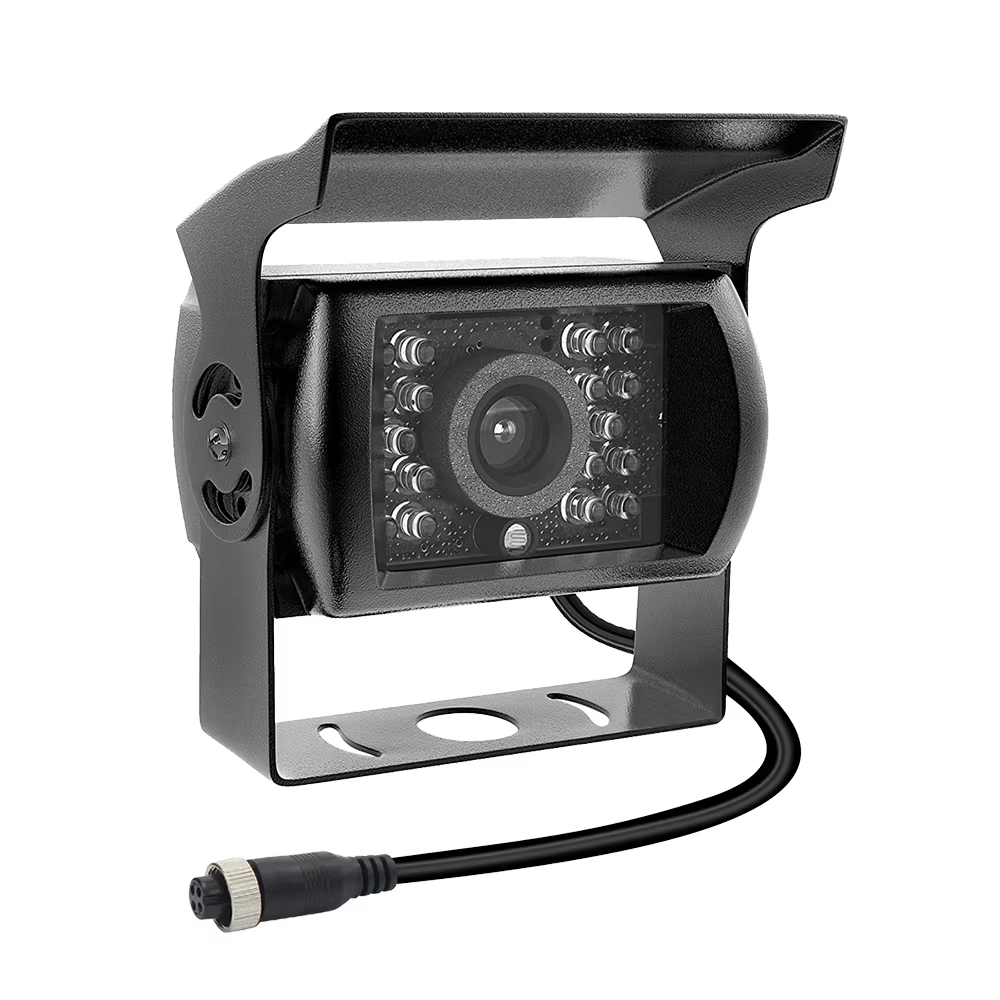
At the core of a professional-grade automotive AHD camera system engineered by Jemrok Industrial Technology (Shenzhen) Co., Ltd. is a high-performance CMOS optical sensor (such as Sony STARVIS™ or GC series) paired with a specialized Analog HD Image Signal Processor (ISP). The ISP processes raw optical data captured by the multi-layer glass lens element, performing real-time Black Level Calibration (BLC), Wide Dynamic Range (WDR) synthesized exposure, 3D Noise Reduction (3DNR), and Automatic White Balance (AWB). The processed digital parallel signal is subsequently converted by an AHD Tx (Transmitter) encoder chip into a modulated high-frequency analog signal transmitted across the vehicle’s wiring harness.
Comparative Technical Analysis: Vehicle Camera Signal Protocols
To assist OEM purchasing managers and automotive engineers in selecting the correct camera architecture for global vehicle fleets, the matrix below outlines the performance characteristics across different video transport technologies:
| Technology Protocol | Video Resolution | Latency (ms) | Max Harness Cable Distance | EMI Susceptibility | System Component Cost |
|---|---|---|---|---|---|
| CVBS (Analog) | 480P / 700 TVL | < 1 ms (Zero) | 15 - 20 Meters | High | Low |
| AHD (Analog High Def) | 720P / 1080P / 4K | < 1 ms (Zero) | 100 - 300+ Meters | Very Low (Modulated Carrier) | Medium (High ROI) |
| HD-TVI / HD-CVI | 720P / 1080P | < 1 ms (Zero) | 100 - 200 Meters | Low | Medium |
| IP / Ethernet (Digital) | 1080P / 4K | 120 - 250 ms (Compression) | 100 Meters (CAT5e) | Negligible | High |
Unlike digital IP cameras that introduce processing latency due to H.264/H.265 compression algorithms—which can compromise real-time emergency braking and reversing safety—AHD cameras deliver zero latency video streaming directly to Android head units, standalone TFT monitors, or multi-channel vehicle Mobile DVRs (MDVR). Furthermore, AHD provides superior immunity against signal loss caused by vehicle ground loops and ignition noise compared to standard analog signals.
2. Technological Development Trends in Automotive AHD Cameras
The global automotive safety landscape is experiencing rapid evolution, driven by regulatory mandates, fleet efficiency goals, and consumer expectations for premium driver assistance systems. Key technical developments reshaping AHD camera manufacturing include:
1080P to 4K Ultra-HD Sensor Integration
While 720P AHD cameras remain popular for standard passenger car reversing setups, commercial fleets and premium aftermarket channels are transitioning rapidly toward 1080P Full HD and 4K resolution sensors. High pixel density allows fleet algorithms and human operators to identify distant license plates and small road obstacles under unfavorable weather conditions.
Ultra-Low Light Starlight Night Vision
Modern AHD cameras incorporate back-illuminated (BSI) sensor technology combined with large f/1.8 to f/1.6 optical aperture lenses. This architecture enables full-color night vision under light levels as low as 0.001 Lux, eliminating the dependence on bright infrared (IR) LEDs that often cause reflective glare against rainy vehicle windows or metallic surfaces.
Automotive AI Edge Computing Fusion
Next-generation AHD cameras are increasingly paired with edge AI processors inside multi-channel Car DVRs or MDVR units. By feeding real-time zero-latency AHD video feeds into neural network chips, vehicle safety systems execute real-time Blind Spot Detection (BSD), Pedestrian Collision Warning (PCW), and Driver Fatigue Monitoring (DMS).
Hermetic IP69K Waterproofing & Wide Voltage
Commercial truck, bus, and heavy machinery deployments demand ruggedization. State-of-the-art AHD cameras utilize die-cast aluminum housings sealed with silicone gaskets to achieve IP68 and IP69K ratings (resistant to high-pressure steam cleaning), alongside wide voltage power management circuits supporting DC 9V-36V inputs.
3. Global Procurement Trends & Sourcing Strategies for B2B Buyers
As global supply chains normalize, wholesale buyers, tier-2 vehicle accessory brands, and fleet system integrators are altering their procurement models when sourcing AHD cameras from Chinese OEMs. Understanding these shifts is vital for maintaining competitive margins and product reliability.
A. Transition from Ready-to-Ship Trading to Customized OEM/ODM Partnerships
Standard off-the-shelf consumer electronic products face intense margin erosion on global e-commerce marketplaces. Forward-thinking distributors are leveraging specialized Shenzhen factories to build proprietary product lines. Customization scope now routinely encompasses optimized lens FOV angles (e.g., 120° for rear view vs. 170° for parking assistance), custom housing mold designs, corporate logo laser engraving, tailored boot screens, and regional language menu configurations.
B. Rigorous Compliance & Certification Standards
Customs authorities in North America and the European Union have tightened enforcement regarding vehicular electronics. Sourcing directors must verify that factory partners maintain documented compliance with CE, FCC, RoHS, and E-Mark (ECE R10) directives. Choosing certified factories prevents costly port detentions and guarantees electromagnetic compatibility with vehicle CAN-bus networks.
C. Total Cost of Ownership (TCO) & Warranty Optimization
In high-reliability fleet applications, the initial unit purchase price accounts for only a fraction of total expenditure. Field failures result in expensive labor recall costs and fleet downtime. Buyers are prioritizing supplier quality assurance protocols—such as 100% optical alignment inspection, 24-hour thermal chamber burn-in testing, and salt-spray corrosion resistance—over sub-dollar initial price discounts.
Frequently Asked Questions for Sourcing Managers
Essential answers regarding factory customization, order logistics, technical compatibility, and supplier evaluation.
Partner with a Leading China AHD Camera Manufacturer
Whether you need custom OEM/ODM development, fleet safety solutions, or wholesale catalog pricing, our engineering team responds within 1 hour.