Featured Rear View Cameras & Automotive Safety Systems
Explore our top-performing CVBS, AHD, and multi-channel vehicular video solutions engineered for global automotive aftermarket distributors and fleet operators.
Executive Sourcing Analysis: The Enduring Strategic Importance of CVBS Rear View Cameras
In the rapidly evolving landscape of automotive safety electronics and fleet management telematics, Composite Video Blanking and Sync (CVBS) rear view camera systems continue to maintain a foundational position within the global automotive supply chain. Despite the commercial emergence of digital HD protocols such as Analog High Definition (AHD) and Ethernet AVB, CVBS technology remains the benchmark standard for universally compatible, low-latency analog video transmission across passenger vehicles, commercial buses, logistics trucks, and agricultural machinery.
As global automotive importers, Tier-1 system integrators, and aftermarket brand owners seek verified manufacturing partners in China, evaluating the technical engineering, optical component choices, and signal integrity of CVBS rear view camera modules becomes paramount. China's manufacturing ecosystem—specifically centered in technology hubs like Shenzhen and Guangdong province—produces over 70% of the world’s automotive backup visual sensors. Navigating this dense supplier landscape requires an authoritative understanding of sensor architectures, optical glass assembly tolerances, ISP (Image Signal Processor) signal formatting, and rigorous thermal and ingress protection standards.
Understanding CVBS Technical Signal Architecture
CVBS represents a legacy analog video broadcast signal format that encapsulates color (chrominance), brightness (luminance), and synchronization pulses into a single coaxial transmission channel. Operating across standardized NTSC (National Television System Committee, 525 lines / 60Hz) and PAL (Phase Alternating Line, 625 lines / 50Hz) signal structures, CVBS cameras output an uncompressed 1.0 Vp-p composite video signal into a nominal 75-ohm impedance cable.
The primary engineering advantage of a high-performance CVBS rear view camera lies in its instantaneous signal synchronization. Unlike digital network camera streams (e.g., IP or USB cameras) that introduce frame encoding and decoding latencies ranging between 120ms to 350ms, a hardware-tuned CVBS system delivers zero-perceivable video delay (<15ms). For reverse parking safety, where split-second reaction times prevent collision obstacles, this latency margin is critical for passenger car drivers and commercial fleet operators alike.
| Technical Parameter | Standard Entry CVBS Camera | Premium Automotive CVBS Camera | Industrial Commercial CVBS Camera |
|---|---|---|---|
| Image Sensor Type | 1/4" Color CMOS (480 TVL) | 1/2.9" Sony STARVIS / PC7070 (700-800 TVL) | 1/3" High-Dynamic CMOS (800+ TVL) |
| Minimum Illumination | 0.5 Lux @ F2.0 | 0.01 Lux / 0 Lux (IR LED Assisted) | 0.001 Lux Starlight Night Vision |
| Optical Lens Construction | 2G2P (2 Glass + 2 Plastic) | 6G Full Glass + IR Cut Filter | 6G All-Glass Anti-Scratch Metal Barrel |
| Ingress Protection Rating | IP67 Waterproof | IP68 / IP69K Sealed Injection | IP69K High-Pressure Steam Proof |
| Operating Voltage | 12V DC (±10%) | 9V - 24V DC Wide Voltage | 9V - 36V DC Step-Down Isolated |
| Signal-to-Noise Ratio (SNR) | > 42 dB | > 48 dB | > 52 dB (3D Noise Reduction) |
Core Product Categories & Engineering Recommendations
When procuring from China CVBS rear view camera suppliers, buyers must align the hardware specification with the intended vehicular application. Below is an engineering evaluation of key camera form factors supplied across global markets:
1. Universal Flush-Mount & Bracket Reverse Cameras
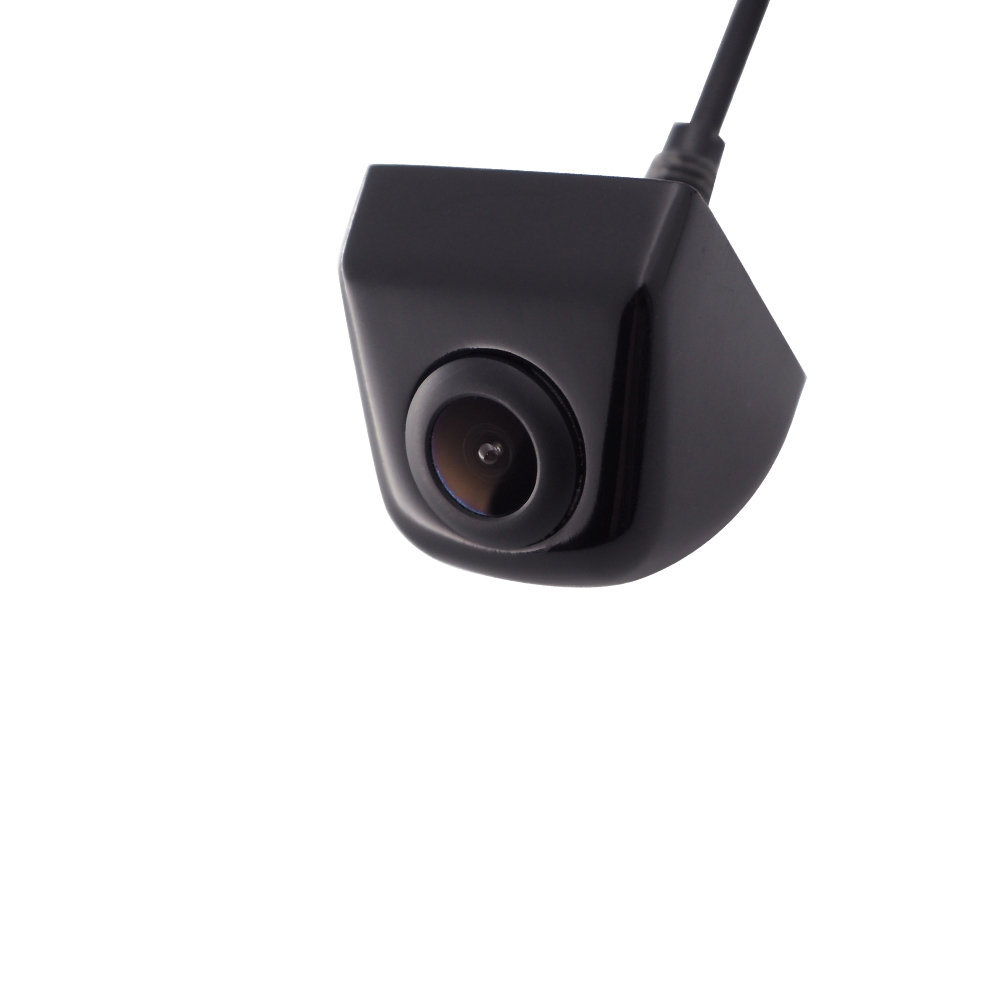
Designed for universal passenger car retrofits, these cameras utilize compact zinc-alloy or ABS housings equipped with butterfly mounting brackets or threaded flush-mount barrels. Leading suppliers integrate custom PC7080, PC1058, or SmartSens CMOS image sensors paired with custom-angled micro-lenses providing a horizontal Field of View (FOV) between 120° and 170°.
- Optical Guideline: Ensure the optical assembly features a true 6-layer glass (6G) lens stack rather than plastic (2P/2G) variants to prevent optical yellowing, focal distortion, and thermal defocusing when exposed to solar UV radiation.
- Dynamic Parking Lines: Advanced CVBS camera modules incorporate internal MCU firmware that overlays trajectory parking lines directly onto the analog feed without requiring external steering wheel CAN-bus modules.
2. Heavy-Duty Commercial Vehicle & Bus Cameras
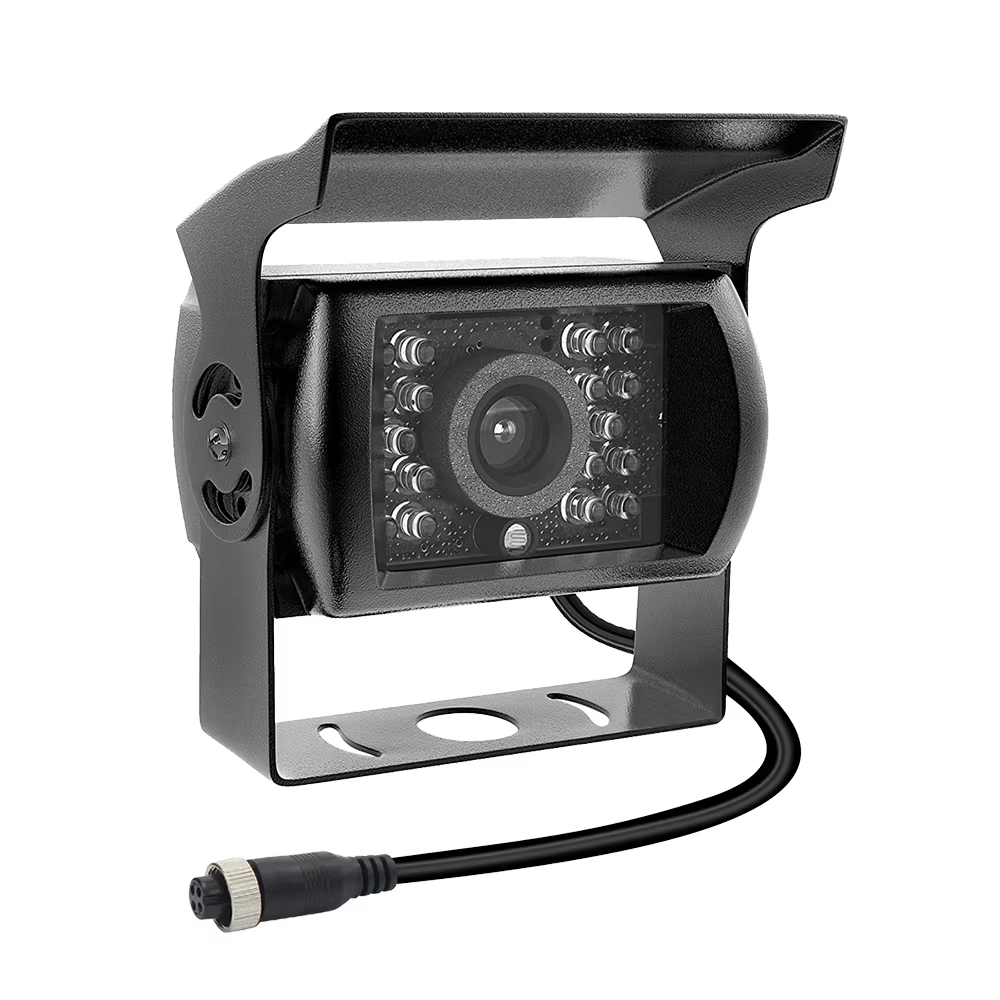
Commercial vehicles, long-haul freight trailers, buses, and mining equipment demand extreme durability. CVBS cameras in this category utilize heavy-gauge aluminum alloy or stainless steel die-cast housings rated to IP69K ingress protection. They must withstand high-pressure steam cleaning and continuous vibrational stress defined under ISO 16750 standards.
- Power Conditioning: Commercial CVBS cameras must feature integrated wide-voltage step-down regulators (9V–36V) with transient voltage suppression (TVS) diodes to absorb load dumps, inductive voltage spikes, and reverse polarity connections common in 24V vehicle battery systems.
- Connector Standardization: Standard RCA connectors are unsuitable for heavy trucks. High-reliability suppliers utilize 4-pin GX12 screw-lock aviation connectors to guarantee waterproof signal grounding over 15-to-30-meter cable runs.
3. OEM OEM-Style License Plate Light Integrated Cameras
Tailored for brand-specific aftermarket upgrades (e.g., Volkswagen, BMW, Toyota, Ford), these CVBS cameras are directly moulded into replacement license plate lamp assemblies or trunk handle switches. They retain original vehicle aesthetics while delivering plug-and-play installation for factory or aftermarket infotainment head units.
Future Procurement Trends in the Global Automotive Vision Market
As global sourcing directors evaluate supply chain risk and technology roadmaps over the 2025–2030 timeline, several key macro trends are reshaping the procurement strategies for China CVBS camera exporters:
Trend 1: The Coexistence of CVBS and AHD via Dual-Mode Auto-Switching Firmware
While AHD (720P/1080P) delivers higher pixel resolution, millions of factory OEM head units and legacy Android infotainment displays in global circulation strictly accept CVBS analog inputs. To streamline inventory management (SKU consolidation) for global importers, top-tier Chinese manufacturers now produce Hybrid CVBS/AHD Dual-Output Cameras. A simple loop cable cutter or firmware toggle allows installers to switch seamlessly between CVBS (700 TVL NTSC/PAL) and AHD 720P signal modes on a single hardware inventory platform.
Trend 2: Integration of Starlight ISP Sensor Technology into Analog Architectures
Historically, analog cameras suffered from noisy, granular night vision video quality. Modern CVBS camera manufacturing has incorporated advanced back-illuminated (BSI) CMOS sensors with high dynamic range (HDR) capability. By pairing starlight-grade sensors with ISP digital noise reduction (3D-DNR), modern CVBS backup cameras achieve crisp, clear night imagery under ambient light conditions as low as 0.001 Lux—eliminating the need for power-hungry infrared LED boards that generate unwanted thermal buildup inside sealed camera bodies.
Trend 3: Environmental Sustainability & International Compliance Mandates
International import regulations are becoming increasingly strict. European and North American customs demand full compliance with RoHS (Restriction of Hazardous Substances), REACH, CE, and FCC EMC certifications. Automotive importers must partner with Chinese suppliers whose production facilities are audited for ISO 9001 and IATF 16949 automotive quality management standards, ensuring lead-free soldering, eco-friendly plasticizers, and low electromagnetic interference (EMI).
Comprehensive Technical FAQ for B2B Importers & Sourcing Managers
To assist procurement teams in evaluating factory capabilities and selecting optimal technical specifications, we have compiled detailed answers to common engineering and commercial queries:
Why Partner with Jemrok Industrial Technology (Shenzhen) Co., Ltd.?
Located in the heart of China’s automotive electronics innovation hub in Shenzhen, Jemrok Industrial Technology (Shenzhen) Co., Ltd. stands as a specialized manufacturer with over 6 years of focused research, development, and high-precision manufacturing in vehicle cameras, multi-channel DVR systems, and dash camera recording platforms.
- 1,500 m² Standardized Production Facility: Housing automated SMT placement lines, dust-free lens assembly cleanrooms, and automated waterproofing injection stations.
- Robust Annual Production Capacity: Delivering between 300,000 to 500,000 camera units annually to global distributors, vehicle brand owners, and fleet management fleets.
- In-House R&D Engineering Department: Staffed by experienced hardware and firmware engineers capable of delivering custom optical tuning, firmware modification, and housing CAD development.
- Flexible Order Terms: Supporting OEM/ODM branding from accessible 50-set minimum order quantities alongside rapid sample turnaround within 48 hours.
- 100% Tested In-Line Quality Assurance: Every camera module undergoes 100% image clarity calibration, burn-in aging, and waterproof pressure chamber validation prior to packaging.
Full OEM Customization
Complete control over product identity: custom housing coatings, laser-etched branding, customized retail packaging boxes, user manuals, and customized firmware boot screens.
Agile ODM Hardware R&D
Have a specialized vehicle form-factor requirement? Our R&D team designs private-tooling camera housings, custom PCB layouts, and multi-voltage step-down circuitry tailored to your exact market niche.
Verified Quality Compliance
All camera series are fully tested and certified compliant with CE, FCC, and RoHS standards. Comprehensive test reports and certificates are available on demand for seamless international customs clearance.
Partner with China's Premier CVBS Rear View Camera Factory
Request factory-direct wholesale pricing, order sample evaluation units, or discuss your upcoming OEM/ODM automotive project with our Senior Engineering Team today.