Automotive-Grade Vision & Electronics Solutions
Precision-engineered rear-view cameras, multi-channel dashcams, and wireless power modules compliant with European Union safety standards.
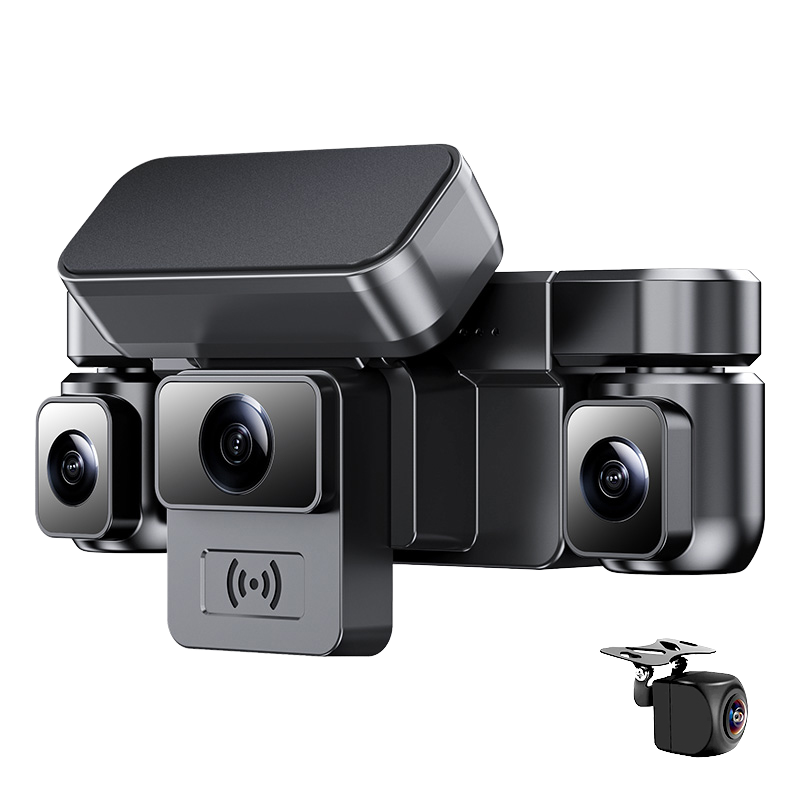
1. Technical Architecture of CE-Certified Fisheye Automotive Cameras
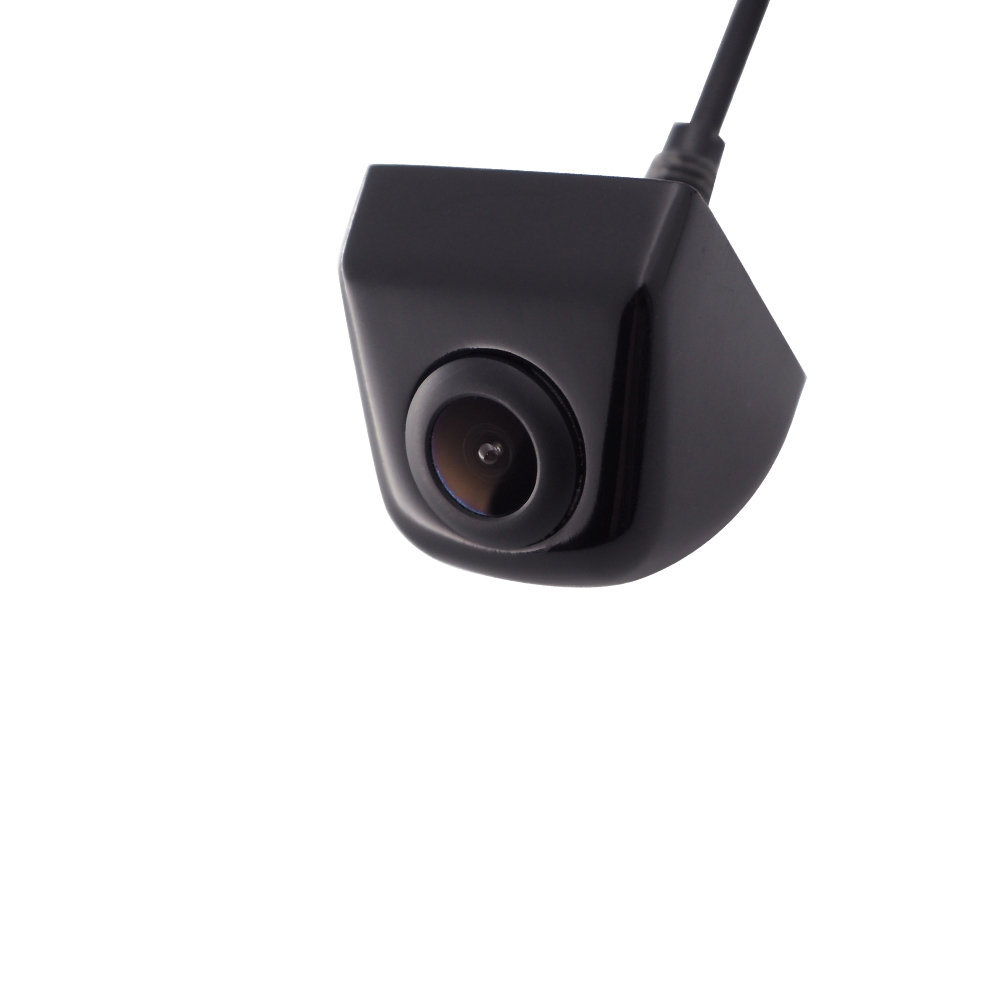
In modern commercial fleet monitoring, ride-share safety, and passenger vehicle ADAS (Advanced Driver Assistance Systems), the wide-angle fisheye vehicle camera serves as the foundational optical node. Unlike traditional narrow FOV (Field of View) automotive lenses that leave severe blind spots around vehicle perimeters, ultra-wide fisheye cameras cover ultra-broad angular fields—typically ranging from 170° to 210° horizontally and vertically.
Achieving official European CE certification (specifically covering the EMC Directive 2014/30/EU, EN 55032 Class B emission standards, and EN 55035 immunity specifications) requires stringent electrical engineering, optical precision, and thermal insulation. B2B importers and automotive OEMs must evaluate fisheye camera architecture across four core technological layers:
Glass-Plastic Hybrid Optical Lens
Utilizing 6G or 7G all-glass spherical and aspherical optical elements with anti-reflective coating to minimize chromatic aberration and thermal focus drift across -40°C to +85°C environments.
Hardware-Level Dewarping ISP
Embedded Image Signal Processors (ISP) running real-time rectilinear spatial correction algorithms to translate curved fisheye distortion into rectified, flat planar video feeds for driver monitoring screens.
Wide Dynamic Range (WDR / HDR)
High-sensitivity CMOS sensors (such as Sony STARVIS series) capable of over 120dB dynamic range, preventing highlight blowout in direct sunlight while rendering clear plate details in extreme dark night environments.
Technical Benchmark Comparison: Standard Backup Cameras vs. Advanced Fisheye Modules
| Performance Metrics | Standard Rear Backup Camera | 360° Commercial Fisheye Camera | Jemrok Industrial OEM Specification |
|---|---|---|---|
| Field of View (FOV) | 110° - 130° Horizontal | 180° - 210° Panoramic | 180° Ultra-Wide Optical Glass Lens |
| Distortion Profile | Minimal barrel distortion | Severe fisheye curvature | Integrated Hardware ISP Dewarping Pipeline |
| Ingress Protection | IP67 Standard | IP68 / IP69K High Pressure Wash | Hermetically Sealed IP69K Waterproof Body |
| Operating Voltage | 12V DC fixed | 12V - 24V DC Wide Range | 9V - 36V Transient-Protected Commercial Voltage |
| CE EMC Compliance | Basic radiated emission test | EN 55032 / EN 55035 Verified | Full CE, FCC, RoHS Certified with Test Reports |
2. Global B2B Sourcing Trends for Automotive Cameras (2025–2030)
As commercial logistics fleets, ride-hailing networks (e.g., Uber, Lyft), and municipal transit operators rapidly upgrade their onboard telematics systems, procurement strategies for automotive vision hardware are undergoing a structural shift. Distributors and brand owners must adapt to three macro trends transforming vehicle camera wholesale markets:
Trend A: Convergence of Panoramic Vision and Edge AI Analytics
Standalone passive video recording is rapidly giving way to intelligent edge-processing cameras. Modern 180° and 360° fisheye car camera assemblies now integrate lightweight Neural Processing Units (NPUs) capable of running real-time AI algorithms at the edge. Key functional enhancements include Blind Spot Detection (BSD), Pedestrian Collision Warning (PCW), and driver monitoring system (DMS) occupant tracking within cabin spaces. Wholesalers sourcing fisheye cameras must ensure their suppliers support customizable firmware SDKs to integrate seamlessly with third-party MDVRs (Mobile Digital Video Recorders) and telematics platforms.
Trend B: Shift from Analog CVBS to Digital High-Definition Protocols
Historically, legacy commercial vehicle reversing systems relied on low-resolution CVBS (NTSC/PAL) signals. Modern global procurement demands have overwhelmingly pivoted toward Analog High Definition (AHD 720P/1080P) and digital Ethernet-based transmission (Ethernet AVB / Automotive SerDes). AHD fisheye modules provide uncompressed, zero-latency video transmission over simple coaxial wiring up to 50 meters—making them the cost-effective sweet spot for long-wheelbase heavy-duty trucks, trailers, and public transit buses.
Trend C: Strict Regulatory Mandates and Sustainability Compliance
With the European Union enforcing updated General Safety Regulation (GSR II) requirements for vulnerable road user detection, non-certified or unshielded electronic devices face immediate customs impoundment or retail recall. Procurement buyers must demand comprehensive CE EMC, FCC, and RoHS compliance certificates directly from verified manufacturing sources. Furthermore, buyers are prioritizing suppliers with transparent supply chains that restrict hazardous substances and guarantee long-term component availability (typically 3 to 5 years minimum lifecycle per hardware platform).
Compliance Safety Margin
Buying certified CE/FCC products reduces liability risks for retail brands and guarantees low electromagnetic interference with vehicle CAN-bus electronics.
AHD Signal Integrity
Low attenuation coaxial connections protect high-resolution 1080P fisheye video signals against high-voltage engine noise and alternator whine.
Global Fleet Standardization
Standardized form factors and wide-voltage tolerances (9-36V DC) allow global fleet operators to deploy uniform hardware across mixed vehicle types.
3. Jemrok Industrial Enterprise Manufacturing Capabilities
Headquartered in the global electronics manufacturing capital of Shenzhen, China, Jemrok Industrial Technology (Shenzhen) Co., Ltd. stands as an industry-leading manufacturer specializing exclusively in automotive vision engineering, car DVR recorders, streaming media rearview mirror systems, and fisheye vehicle backup cameras.
Unlike generalist trading firms or small-scale assemblers, Jemrok operates a modern 1,500 square meter standardized production plant backed by 6+ years of dedicated R&D refinement. Our engineering team comprises senior optical engineers, hardware PCB designers, and software firmware specialists who turn client concepts into market-ready products with unprecedented speed.
Core Factory Infrastructure & Supply Chain Strengths
Jemrok’s manufacturing framework is engineered specifically to service global automotive electronics brands, fleet integrators, and regional B2B importers who require flexible customization without standard high-volume MOQ barriers:
- Annual Output Capacity: Our production line yields between 300,000 and 500,000 camera and recorder units per year, ensuring rapid delivery times even during peak seasonal demand spikes.
- Agile OEM & ODM Customization: We offer comprehensive private-label services starting from a low minimum order quantity of just 50 sets. Customized parameters include silk-screen brand logo printing, custom firmware boot screen graphics, localized UI menu languages, housing colorways, and tailored retail packaging boxes.
- In-House R&D & Rapid Prototyping: Our R&D department launches innovative product designs every quarter, allowing our brand partners to continuously stay ahead of competitor catalog offerings with modern aesthetics and upgraded chipset platforms.
- Automotive Quality Assurance Testing: Every camera module undergoes rigorous physical quality validation before leaving our factory floor, including high-frequency vibration testing, thermal shock chamber cycling (-40°C to +85°C), 24-hour salt-spray corrosion testing, and 100% submersion waterproof testing.
4. Frequently Asked Questions (FAQ) for B2B Importers
Clear, direct technical and commercial answers to assist procurement officers, product managers, and fleet buyers in making informed sourcing decisions.
Custom OEM and ODM orders—including personalized brand logos, custom firmware splash screens, and localized packaging—start at a low MOQ of only 50 sets. For standard in-stock product samples, we support evaluation orders starting from 2 units.
Fisheye lenses naturally create significant peripheral curved distortion. Our embedded ISP hardware runs real-time trigonometric coordinate mapping algorithms that straighten video edges before outputting to the display screen, giving drivers a natural, easy-to-judge spatial view while maintaining a 180° field of vision.
Yes. All standard camera models comply with European CE (EMC/LVD), FCC Part 15 Class B, and RoHS 3 environmental safety directives. Complete test documentation, laboratory reports, and certificates of conformity are available upon request during the formal quotation process.
Standard sample orders ship within 3 to 5 working days. Mass production bulk orders (500 to 5,000 units) typically require 15 to 20 working days following final artwork sign-off and deposit confirmation. Accelerated express dispatch is available for urgent fleet installations.
Yes. Our commercial vehicle camera series features a wide-voltage buck converter power design supporting input voltages from 9V to 36V DC. Integrated TVS protection shields internal electronics against inductive power spikes, reverse polarity, and sudden load dumps standard in 24V commercial trucks and buses.
Ready to elevate your product catalog with high-margin, certified automotive vision hardware?
Get a Quote